ع



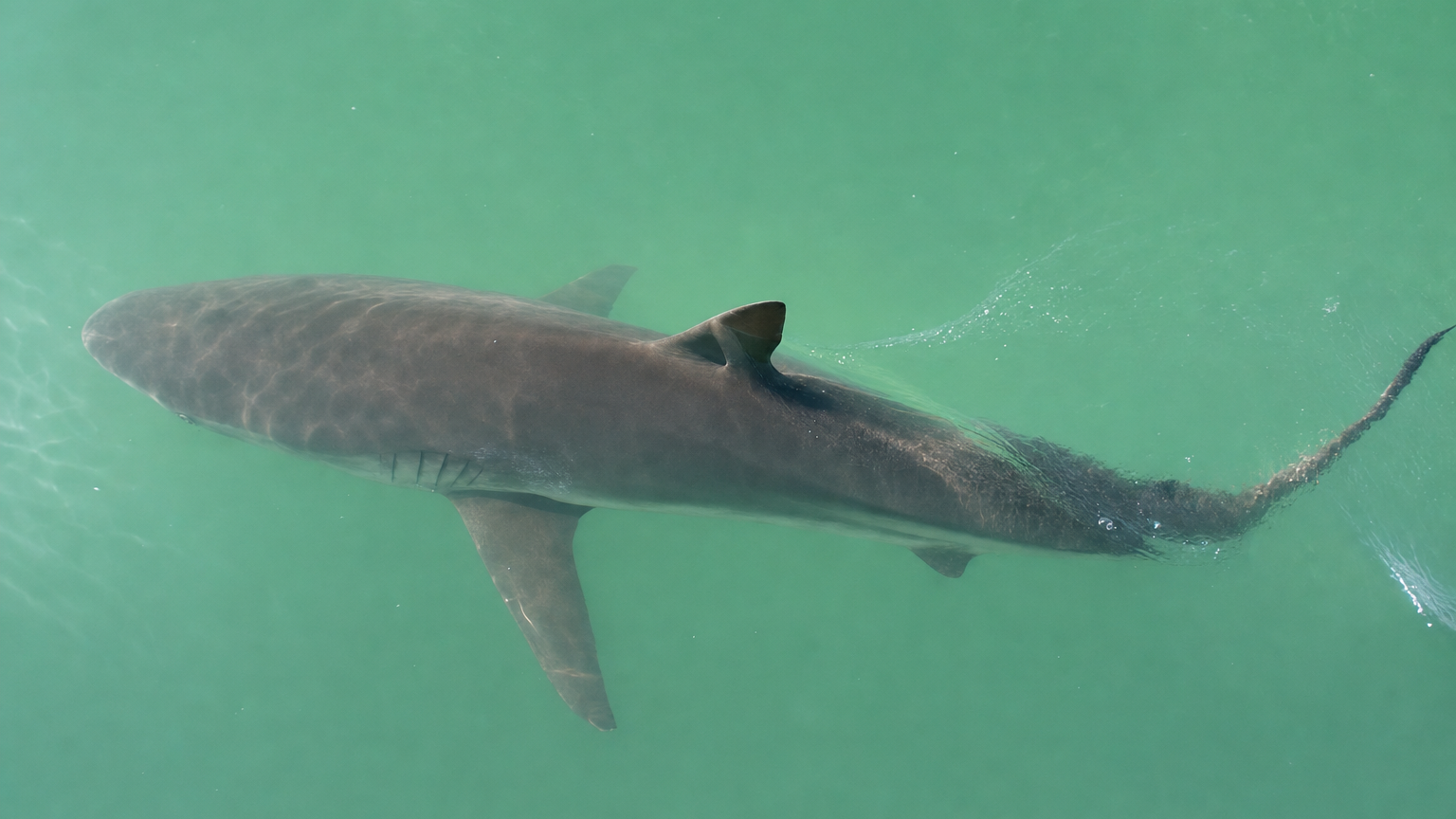
South Korea’s oceans ministry reported that the female dusky shark known as Bukangi was successfully directed out of the artificial waterway at Bukhang Waterfront Park during an eight-hour effort on October 21 but swam back overnight by diving under a barrier. The latest attempt on October 22 has positioned the approximately 3-meter shark between an outer and inner net as officials evaluate further steps to encourage it to head into deeper waters. Maritime authorities have expressed concern that prolonged time in the shallow canal could affect the animal’s stamina, especially with falling water temperatures.[[1]](https://www.channelnewsasia.com/east-asia/south-korea-shark-canal-new-rescue-bid-bukhangi-6481361)
The shark was first spotted on September 18 in the narrow canal at Busan’s North Port, where it is believed to have followed prey from the sea and then failed to navigate back out. Yonhap News Agency reported that by early October nearly three weeks had elapsed without the animal departing despite initial efforts by local maritime police to drive it away. The National Institute of Fisheries Science identified the creature as a dusky shark, a species classified as endangered on the IUCN Red List.[[2]](https://en.yna.co.kr/view/AEN20261006002900315)
More than 1.6 million visitors have flocked to the waterfront park to view the shark since its arrival, transforming the site from a typical draw of around 2,000 daily guests into a major attraction that included a visit by the South Korean president. Busan city officials named Bukangi an honorary ambassador following an Instagram poll that received overwhelming public support, while local businesses launched related merchandise including a special edition liquor bottle and baseball team keychains featuring a shark-suited mascot. The New York Times noted that the shark has dominated social media discussions and become the city’s unlikely star.[[3]](https://www.nytimes.com/2026/10/16/world/asia/south-korea-busan-shark.html)
Earlier rescue bids on September 29 and October 2 proved unsuccessful, with the first using water jets from five vessels that the shark dodged by swimming behind the boats or submerging, according to Reuters. A subsequent drag-net operation saw the equipment snag on the canal bed, allowing the animal to retreat during high tide. The Guardian reported that scientists had advised against overly aggressive tactics that might stress the shark or provoke aggression, leading to temporary suspensions of efforts.[[4]](https://www.reuters.com/world/asia-pacific/shark-stranded-south-korean-canal-draws-600000-visitors-rescue-bid-fails-2026-09-30/)
Officials have deployed more than 100 workers daily to monitor the shark’s condition amid signs of a possible snout injury visible in circulating videos and worries over its restricted ability to feed in the confined space. Environmental coverage from Mongabay linked the incident to a recorded rise in shark sightings and bycatch around South Korea in recent years, potentially tied to warming seas that allow species like the dusky shark to venture further north than in the past. The Institute of Fisheries Science has assessed the shark as stable but noted the limitations of its current environment.[[5]](https://news.mongabay.com/2026/10/celebrity-shark-trapped-in-south-korean-canal-stirs-concerns-over-warming-seas/)
Busan Mayor Chun Jae-soo thanked the shark for the tourism boost, stating that the publicity it generated would have cost trillions of won if the city had paid for equivalent promotion, as covered by Channel News Asia. The economic impact has extended to increased activity at nearby businesses and a surge in park attendance during the Chuseok holiday period that reached 480,000 visitors over four days. This unexpected lift comes as the canal, under a mile long and roughly 200 feet wide, forms part of the historic North Port area central to the city’s maritime trade.