ع
ع


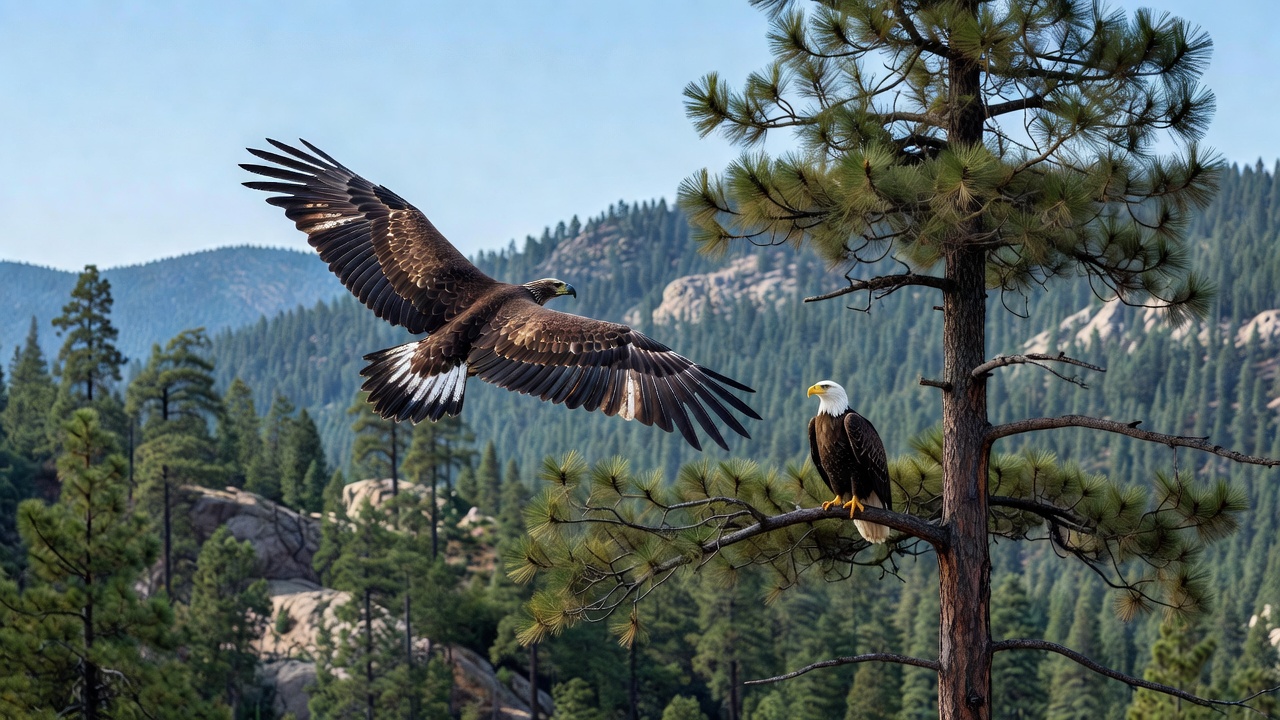
Friends of Big Bear Valley reported that Luna launched from the nest at approximately 9:25 a.m. Pacific time on June 29, executing a controlled glide directly to the Simba tree where the adult male Shadow was perched. The juvenile, which had been wingercising on the nest’s high perch the day before, followed a similar milestone by its sibling Sandy, who had fledged 24 hours earlier after an unplanned departure from the structure. The pair of eaglets, both around 11 to 12 weeks old, hatched in early April, with Luna arriving on April 5 according to nest records maintained by the organization.
The Jackie and Shadow nest in the San Bernardino National Forest has been active since the fall of 2013, following the first documented hatching in Big Bear Valley in 2012 that produced a chick successfully raised to fledge, Friends of Big Bear Valley historical accounts state. Annual closures of surrounding areas to vehicle traffic and foot traffic help shield the breeding site during the critical period, a protocol in place to limit disturbances for the resident pair and their offspring. Social media updates from the group, including Instagram and Facebook posts, documented Luna’s final days in the nest with images of vigorous wing exercises and perching activity that signaled readiness for the transition.
U.S. Fish and Wildlife Service estimates based on 2018 and 2019 surveys place the bald eagle population in the lower 48 states at 316,700 individuals, including 71,467 breeding pairs, a figure that reflects sustained growth since the species’ removal from the endangered list. The service’s data trace the recovery to the 1972 ban on DDT, combined with habitat protections and enforcement of the Bald and Golden Eagle Protection Act, which together reversed a decline that had left only 417 nesting pairs by 1963. Subsequent surveys, including one released in 2021, confirmed the upward trajectory, with the population having expanded rapidly in the years after delisting in 2007.
Big Bear Valley’s monitoring effort, which includes a 24-hour livestream, has enabled detailed tracking of behaviors such as food deliveries and fledging sequences for Jackie and Shadow’s broods over multiple seasons. In this case, both Sandy and Luna remained near the nest area after their initial flights, with Sandy observed midway up a headless tree in a sheltered position, the Friends of Big Bear Valley update from June 29 indicated. The organization’s logs note that prior fledglings from the same nest have typically stayed in the vicinity for up to a month, returning intermittently for meals or roosting.
Regional wildlife managers have maintained the webcam setup and public closures to balance observation with protection, allowing global viewers to follow events without direct interference at the site east of Los Angeles. The 2026 season produced two viable eaglets for the established pair, adding to the roughly dozen eggs laid at the location since regular nesting began more than a decade ago. Updates distributed via the Friends of Big Bear Valley platforms described Luna’s fledge as graceful and without incident, contrasting with Sandy’s earlier unplanned exit.
The U.S. Fish and Wildlife Service continues aerial and ground surveys across the country to refine population models, incorporating data from migratory bird program observers and regional partners. In California, nests like the one at Big Bear contribute to the broader western population segment that has benefited from consistent legal safeguards and public engagement in conservation reporting. Post-fledge monitoring by the local group tracks the juveniles’ progress as they develop independent foraging skills under continued parental presence in the valley.