ع
ع


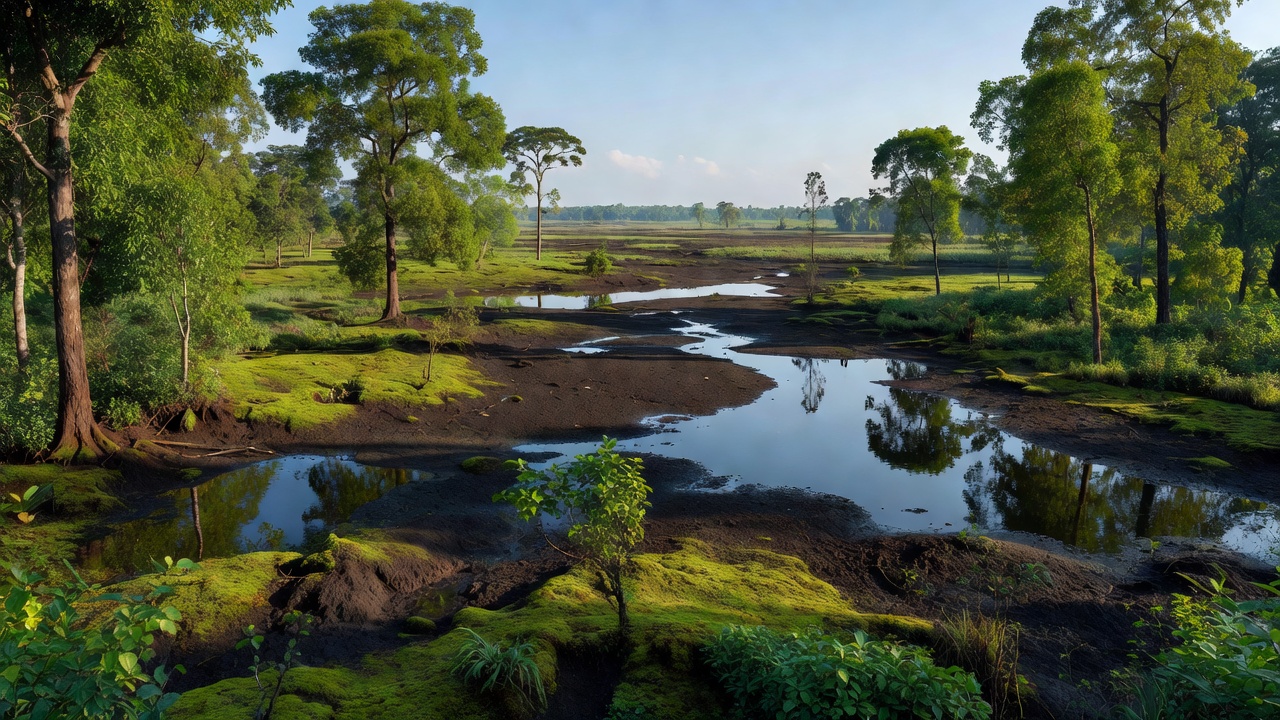
Indonesian volunteers are on the front lines of efforts to contain peatland wildfires that threaten to unleash stored carbon on a massive scale. A BBC News report detailed how these community firefighters risk their lives in regions such as Central Kalimantan where peat deposits can exceed 20 meters in depth. Their work has become more critical as a strengthening El Nino drives drier conditions across the archipelago in September 2026.
Peatlands are incredibly effective carbon stores because their waterlogged conditions slow decomposition allowing carbon to accumulate underground for thousands of years Dr Nisa Novita a peatland researcher at Indonesian conservation NGO Yayasan Konservasi Alam Nusantara told the BBC. But this also means they can become a carbon bomb when they are drained or burned because that carbon can be rapidly released into the atmosphere she added. Indonesia holds some of the world’s largest tropical peatland reserves which when ignited contribute disproportionately to global emissions according to multiple scientific assessments.
The 2015 fire season burned 2.6 million hectares including substantial peat areas causing economic damages of $16.1 billion and exposing 43 million people to hazardous haze World Bank figures show. Subsequent years saw continued challenges with the Ministry of Environment and Forestry recording 1.16 million hectares burned in 2023. A Greenpeace Southeast Asia report found that around 599,000 hectares of that total occurred within prioritized peat hydrological units underscoring gaps in restoration outcomes.
In response the government created the Peatland and Mangrove Restoration Agency to coordinate rewetting and community engagement programs across seven priority provinces. Local Masyarakat Peduli Api groups have played a key role in some areas with one Riau village reporting no fires since 2017 thanks to volunteer patrols and infrastructure the Thomson Reuters Foundation reported. Setiono Ono a former logger who now leads such efforts stated that the community takes ownership of prevention measures.
Health impacts from the smoke remain severe with more than 12,000 child respiratory cases recorded in parts of South Kalimantan during the latest outbreak according to local authorities. Rizma Nur Fatimah a teaching assistant described classroom conditions where smog was so thick you could not see your own feet she told the BBC. Harvard and Columbia university researchers previously estimated that the 2015 haze led to 100,000 premature deaths across affected countries.
Monitoring data from Pantau Gambut showed thousands of peatland hotspots in the first months of 2026 even outside peak dry periods. This activity occurs against a backdrop where peat fires have released between 0.81 and 2.57 gigatonnes of carbon in major events according to studies cited by the International Union for Conservation of Nature. Volunteers continue to supplement official responses but face resource shortages that limit their ability to cover all vulnerable zones.