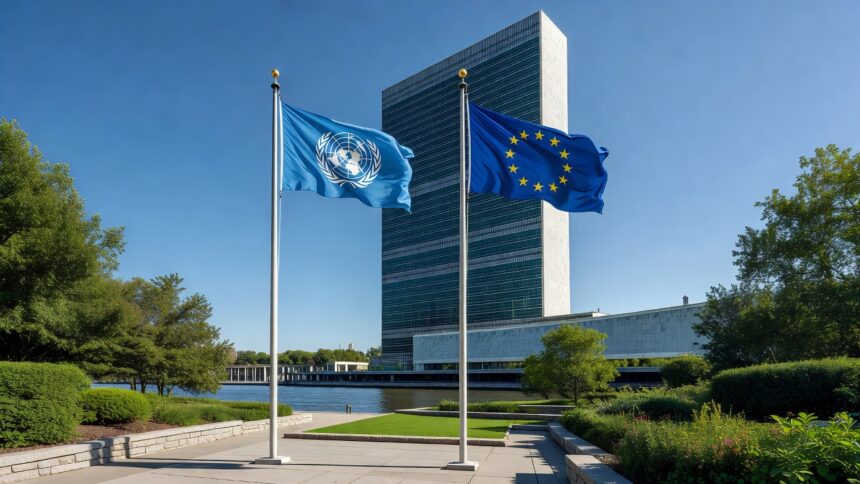
The United Nations and the European Union have reaffirmed their strong partnership in addressing conflict-related sexual violence this week in a joint statement that called for enhanced global efforts to end impunity for these crimes and better support for survivors. The move comes as the UN reported a 25 percent increase in verified cases of such violence in 2024, underscoring the urgency of coordinated international action across conflict zones. Both organizations pledged to continue collaborating on prevention, accountability and victim assistance programs, according to the statement.
The joint statement detailed specific areas of cooperation, including support for national investigations and prosecutions of sexual violence crimes, according to the European External Action Service. It also emphasized the role of the UN Action network against Sexual Violence in Conflict, which brings together 15 UN entities to work as one on the issue, UN Peacekeeping figures show. EU contributions have included integrating CRSV prevention into its missions and providing funding for related projects in affected countries, an EU statement indicated. The partnership has been active in several regions, helping to build local capacities for response and survivor support.
A report by the UN Secretary-General exposed persistent patterns of conflict-related sexual violence and called for stronger accountability measures, including the use of targeted sanctions, according to a Georgetown Institute for Women, Peace and Security analysis. The document noted that closing protection gaps in peace operations is essential, with systematic deployment of women’s protection advisers recommended. Funding gaps threaten the continuity of UN programs that support survivors, the report warned. All stakeholders are urged to provide predictable support to these mechanisms, the UN assessment found.
The EU has implemented several measures as part of its Gender Action Plan III and Strategic Approach on Women, Peace and Security to tackle the issue, according to a European think tank assessment published in January 2025. These include projects focused on gender-sensitive transitional justice in countries like Colombia and the Democratic Republic of the Congo, an EU review stated. Such initiatives demonstrate the bloc’s pledge to supporting survivors and preventing recurrence of violence. The assessment praised these efforts while noting areas for improvement in EU policies on the matter.
During the annual open debate at the UN Security Council on the topic, several countries including EU members expressed support for the work of the Special Representative of the Secretary-General on Sexual Violence in Conflict, a joint statement from the debate showed. The group called for an end to impunity and demanded accountability as the norm for these crimes. This aligns with the reaffirmed UN-EU partnership that seeks to mainstream these concerns in all peace and security efforts, according to the EU delegation to the UN. Coordination with regional organizations was also highlighted as a key element going forward.
In 2025 the UN verified 9,788 cases of conflict-related sexual violence though the actual figure is likely much higher due to underreporting and stigma, UN figures show. The data places the increase at 25 percent compared to prior periods reflecting the impact of escalating conflicts, a UN report indicated. An EU representative stated, “To succeed in eliminating conflict-related sexual violence, we must work together with all partners. This is a priority for the EU.” Both the UN and EU have prioritized training and early warning systems to prevent such violence according to peacekeeping assessments. The partnership aims to ensure that peace agreements include provisions for addressing sexual violence and protecting women in public life from reprisals.