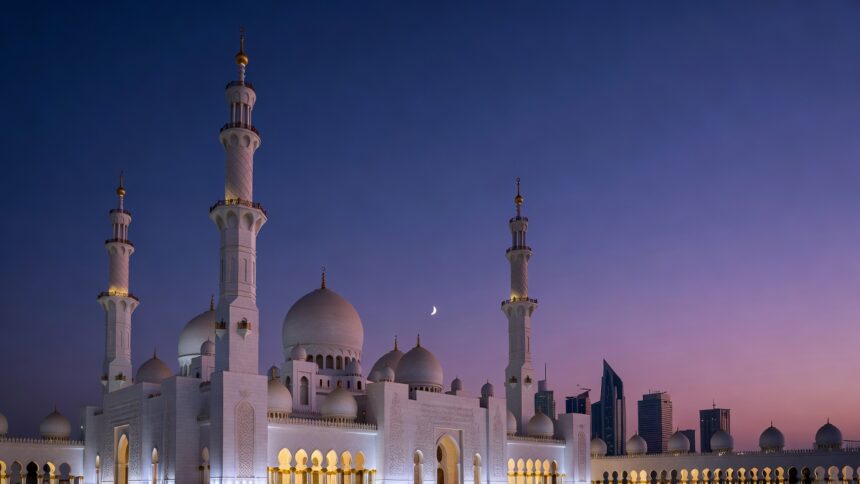
The UAE Presidential Court announced Wednesday that Thursday, March 19, 2026, completes Ramadan after the Shawwal crescent went unsighted, setting Friday, March 20, as the first day of Eid Al-Fitr. The decision by the Moon-sighting Committee affiliated with the UAE Council for Fatwa was detailed in a statement reported by WAM.
According to the statement issued by the Presidential Court and carried by the Emirates News Agency WAM, the UAE Council for Fatwa’s committee convened on Wednesday evening corresponding to 29 Ramadan. It reviewed all available reports and sightings but confirmed the new moon was not visible. Consequently, the holy month extends one more day until Thursday.
The announcement mirrors similar declarations across the GCC region, with Saudi Arabia and other states also observing Eid Al-Fitr starting March 20, 2026, as reported by Gulf Today. Eid Al-Fitr commemorates the end of Ramadan, during which Muslims abstain from food and drink from dawn to sunset. The festival is characterized by special prayers, family gatherings and acts of charity.
The Moon Sighting Committee operates under established religious guidelines that emphasize empirical observation, a method the UAE has employed consistently in prior years according to historical records from the Presidential Court. This year’s process took place amid clear skies that facilitated nationwide monitoring efforts. Residents had anticipated the possible extension as astronomical projections indicated low likelihood of early sighting.
Public sectors in the UAE typically observe a multi-day holiday for Eid Al-Fitr, allowing time for celebrations, as outlined in annual directives from the Ministry of Human Resources and Emiratisation. Mosques will host Eid prayers at varying times on Friday morning depending on location. The occasion also sees increased travel as families reunite.
In a region with deep Islamic traditions, such announcements provide essential guidance for millions of Muslim citizens and residents in the UAE, where the expatriate community includes large numbers from Muslim-majority countries. Data from the Federal Competitiveness and Statistics Centre indicates that religious observances play a central role in the national calendar. The alignment of Eid dates among neighboring countries supports coordinated festivities and cross-border movements during the holiday period.