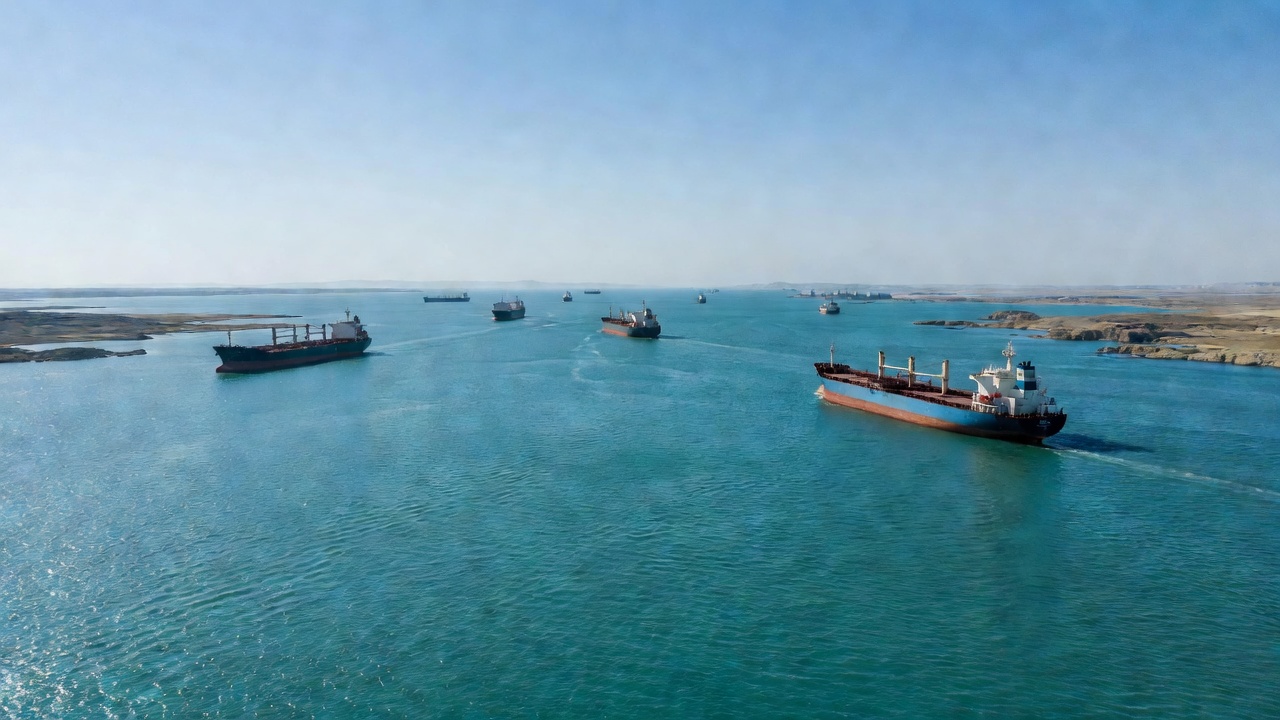
IMO Pauses Strait of Hormuz Evacuation After Cargo Ship Attack
The International Maritime Organization paused its evacuation plan for more than 11,000 stranded seafarers in the Strait of Hormuz on Thursday after a Singapore-flagged cargo ship was attacked in the Gulf of Oman, according to reports from the BBC, Reuters and Al Jazeera. IMO Secretary-General Arsenio Dominguez said several vessels had already been successfully evacuated under the framework coordinated with Iran, Oman, the United States and other regional states, but the agency needed to reconfirm safety guarantees for all involved. The incident has reignited concerns over implementation of a preliminary deal to restore safe passage through the chokepoint that was closed for months during the US-Israel conflict with Iran.
The UKMTO reported that the vessel, identified as the Ever Lovely, was struck by an unknown projectile 7.5 nautical miles southeast of Oman’s port of Dahit with no casualties reported. A US official told CNN that Iran was responsible for the strike, which US media described as involving a drone or other fire. The ship continued its transit via a southern route and exited the strait around 15:30 local time without requiring assistance, ship tracking data from MarineTraffic and Vanguard confirmed.
In a statement the IMO chief noted that the attacked ship had not been operating under the evacuation framework. “I have always reiterated that the safety of the seafarers remains paramount. Therefore, to ensure a coordinated approach and navigational safety, the evacuation plan will be paused until further clarity is obtained,” he added. The large-scale operation had been announced only on Tuesday following the strait’s reopening after a US-Iran memorandum of understanding signed on June 17.
Hundreds of ships and thousands of sailors had been stranded in the Persian Gulf since the end of February after Iran closed the strait in response to US and Israeli attacks, reports from Reuters and Al Jazeera detailed. U.S. Energy Information Administration figures show the Strait of Hormuz typically carries about 20 percent of global petroleum liquids consumption.[[1]](https://www.eia.gov/todayinenergy/detail.php?id=65504) Reuters reported that more than 800 vessels are currently backed up in and around the area as a result of the earlier closure.[[2]](https://www.reuters.com/world/middle-east/oil-back-pre-war-levels-hormuz-traffic-rebounds-us-tries-reassure-gulf-allies-2026-06-25/)
A 14-point agreement reached last week called for Iran to use its best efforts for the safe passage of commercial vessels with no charge for 60 days as part of efforts to end the war and negotiate on Tehran’s nuclear programme. Tehran has however indicated it plans to impose what it calls maritime service fees, a position the US has rejected. Secretary of State Marco Rubio, who is touring the Gulf including a stop in Bahrain, stated that no country is allowed to impose tolls on the international waterway.
The Persian Gulf Strait Authority, the body set up by Iran to manage the strait, posted on X that any consequences arising from the use of unauthorised routes shall be the responsibility of the vessel’s owner, operator and master. Oil prices that spiked after the initial closure have since returned close to pre-war levels near 73 dollars per barrel, according to Reuters data. The IMO’s decision follows the recent diplomatic steps while ship tracking shows limited numbers of vessels have begun moving through the strait since the deal.