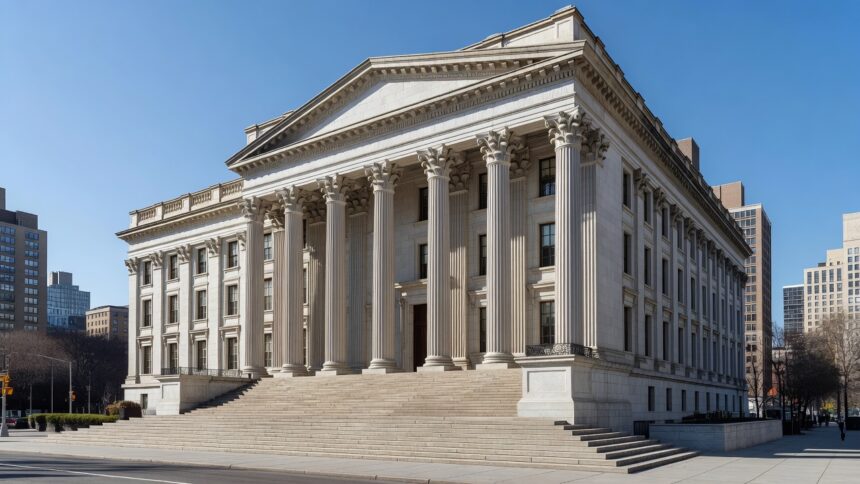
Deposed Venezuelan President Nicolás Maduro appeared in a Manhattan federal courthouse Monday for his first appearance on narco-terrorism charges after his capture by U.S. forces earlier this month. The proceeding is expected to launch a prolonged legal fight over his trial in the U.S. as his lawyers plan to contest the capture’s legality citing sovereign immunity, according to court officials and reports.
The U.S. Justice Department unsealed a 25-page superseding indictment that accuses Maduro, his wife Cilia Flores, their son and associates of engaging in a cocaine trafficking conspiracy with designated terrorist groups since 1999. The charges include narco-terrorism conspiracy, cocaine importation conspiracy and weapons offenses which could result in life imprisonment if convicted. According to the indictment the group provided diplomatic passports, private planes and military escorts to facilitate shipments of thousands of tons of cocaine to the United States.
A United Nations Office on Drugs and Crime analysis shows Venezuela is not a primary cocaine producing country with Colombia accounting for the majority of global coca cultivation. UNODC data from 2019 to 2023 indicates Venezuela had about 260 detected illegal drug processing facilities ranking it fifth globally but with cocaine seizures placing it sixth in Latin America at less than 2 percent of the regional total. The report notes that most cocaine bound for the U.S. transits through Mexico after leaving South America.
The case updates a 2020 indictment against Maduro that was unsealed by the Justice Department and carried a $15 million reward for information leading to his arrest. Following his capture the superseding document added details about alleged partnerships with the Sinaloa Cartel, Zetas, FARC and Tren de Aragua. A U.S. intelligence assessment in April 2025 found no coordination between the Venezuelan government and Tren de Aragua the indictment’s claims notwithstanding.
Maduro’s attorneys are set to argue that he enjoys sovereign immunity as a former head of state citing precedent from other international cases though a similar defense failed for Panama’s Manuel Noriega in the 1990s after his capture by U.S. troops. The United States does not recognize Maduro as Venezuela’s legitimate president after what it called a disputed 2024 reelection. Interim President Delcy Rodríguez demanded Maduro’s return but posted on social media Sunday inviting collaboration with President Trump and “respectful relations” with the U.S.
President Trump stated aboard Air Force One that he sought to “extend American power further in the western hemisphere” and described Colombian President Gustavo Petro as “a sick man who likes making cocaine and selling it to the United States. And he’s not going to be doing it very long.” Trump called on Rodríguez to “provide total access to her country or else face the consequences” while Secretary of State Marco Rubio said the U.S. would not govern Venezuela day-to-day beyond enforcing an “oil quarantine.” The former Venezuelan leader has long maintained that U.S. actions are motivated by a desire to control the country’s oil and mineral resources.
The Southern District of New York where the case is being heard is the same venue that handled the original charges. It remains unclear if Maduro has retained a U.S. lawyer given longstanding sanctions that prohibit Americans from dealing with him without a license from the Treasury Department. The indictment also accuses Flores of accepting bribes starting in 2007 to arrange meetings between drug traffickers and Venezuelan anti-drug officials.