





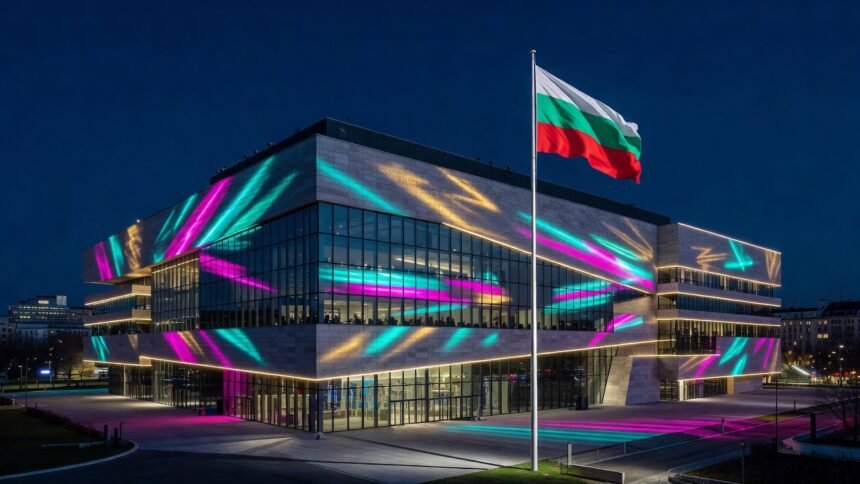
Bulgaria won the Eurovision Song Contest 2026 on May 16 with Dara’s song “Bangaranga” scoring 516 points for a record 173-point margin over Israel in the grand final at Vienna’s Wiener Stadthalle, according to official results released by the European Broadcasting Union. The victory marked the country’s first title in the competition and the first instance since 2017 in which jury and public votes aligned on the winner, Eurovision.com reported. Austrian broadcaster ORF staged the event following the prior year’s win, drawing 35 participating nations in the smallest field since semi-finals began in 2004.
The contest featured semi-finals on May 12 and 14 with the top 10 from each advancing alongside the Big Five countries, host Austria and the previous winner to form a 25-entry grand final, figures from Eurovisionworld.com show. Victoria Swarovski and Michael Ostrowski served as hosts while Emily Busvine presented from the green room, the official event overview stated. Dara received 204 jury points and 312 public points including the aggregated Rest of the World vote, securing the top spot in both tallies as detailed in the complete scoreboard.
Bulgaria’s triumph surpassed the previous record margin of 169 points set in 2009, an assessment published on the Eurovision site found. The New York Times described the outcome as a shock because the entry had not ranked among pre-contest favorites yet surged with the public vote to overtake Israel, which placed second on 343 points. Romania followed in third with 296 points, Australia took fourth on 287 and Italy finished fifth with 281 according to the final tallies.
Iceland, Ireland, the Netherlands, Slovenia and Spain boycotted the competition over Israel’s participation, Reuters reported in its coverage of the May 16 finale. The absences contributed to the reduced participant list while the event adhered to its standard combined voting system of national juries and televotes, each allocating between one and 12 points per country. The United Kingdom placed last with a single point, the BBC noted in its results summary.
“Bangaranga” was written by Dara along with Anne Judith Wik, Cristian Tarcea and Dimitris Kontopoulos while its staging was directed by Fredrik ‘Benke’ Rydman, marking his third Eurovision-winning production after prior successes for Sweden and Switzerland, the official Eurovision site indicated. Bulgaria’s broadcaster BNT achieved its first victory with the song that topped both jury and public rankings for the first such consensus since 2017, according to post-contest analysis. The win hands Bulgaria hosting duties for the 2027 contest under long-standing tradition although specific arrangements have yet to be detailed.
Historical records maintained by Eurovisionworld.com note that the competition launched in 1956 and dropped its live orchestra requirement after 1998 in favor of recorded backing tracks. The 2026 edition continued this format while marking Austria’s return as host in Vienna, a city with prior experience staging the event. Participation data places the 35-country total as the lowest since semis were introduced two decades earlier, the site reported.