ع



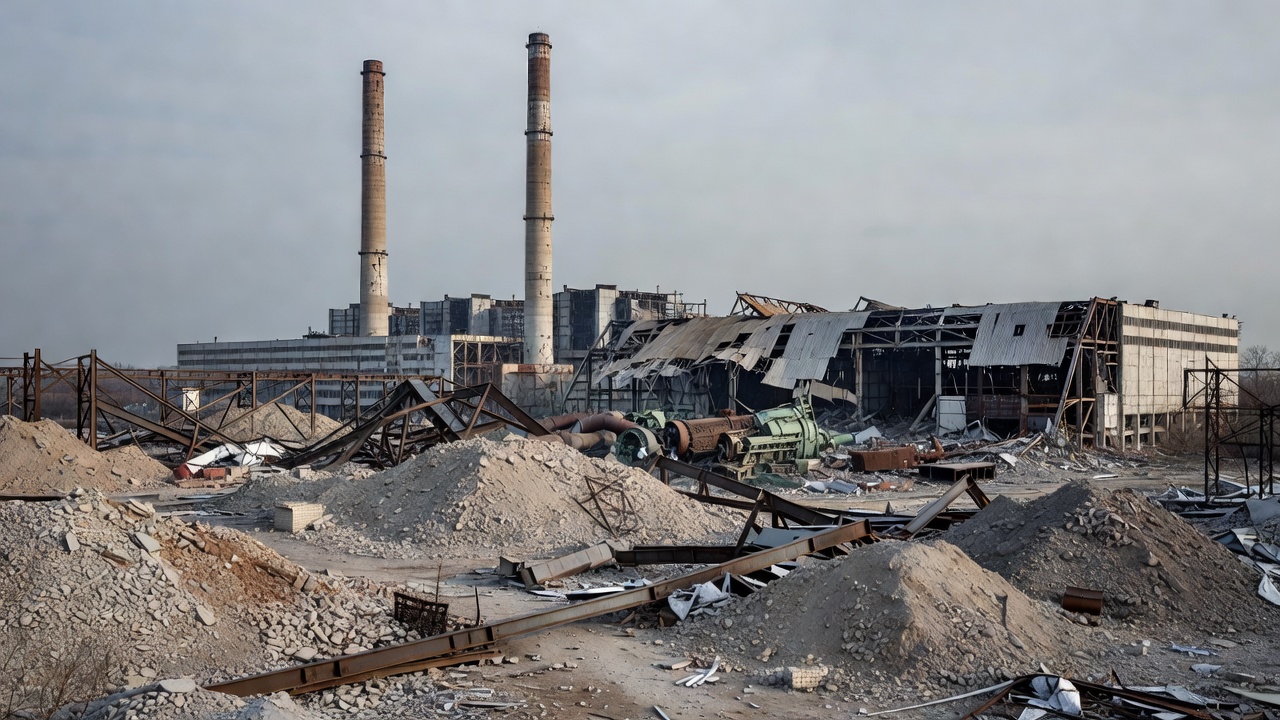
A recent visit to one heavily damaged thermal power plant in Ukraine revealed crews attempting repairs under near-constant threat, where air raid alerts force workers to abandon tasks and seek cover in shelters or chimney foundations multiple times hourly. One employee told reporters that when the warning sounds, “We’ve got to run,” highlighting the split-second decisions required to avoid incoming drones that have already reduced the facility to twisted metal and rubble with turbines buried beneath debris. The site remains offline with power lines unable to transmit electricity before winter ends, according to workers at the location. Vadym Bobyr, who leads recovery at the plant, said the interruptions allow only one or two productive hours daily, according to a detailed on-site report.
DTEK, Ukraine’s largest private energy company, reported that Russian drone assaults overnight cut power to more than 600,000 consumers across five districts in Dnipropetrovska oblast earlier this month, with critical facilities damaged and hospitals switching to generators. The operator noted that repeated strikes have hampered repair crews, following a pattern where three of its five thermal power plants were taken fully offline in early November. Ukrainian air force data showed 164 drones launched in that single wave, of which 112 were jet-powered, according to regional administration statements.
The Institute for the Study of War assessment found Russian forces targeted energy infrastructure in multiple oblasts including Kyiv, Khmelnytskyi and Odesa during early November barrages involving hundreds of drones and missiles, causing emergency outages and reducing nuclear plant output due to grid limitations. President Volodymyr Zelensky stated that such attacks have damaged power plants and substations, leading to widespread blackouts while repair efforts are slowed by follow-up strikes. The Ukrainian Ministry of Energy reported over 20 strikes on energy systems in a 24-hour period in early November, according to official updates.
Energy workers across Ukraine face elevated risks, with the Ministry of Energy recording 612 combined drone and missile attacks on facilities throughout 2025 and continued assaults into 2026 that have killed several personnel weekly. CNN interviews with staff at similar sites described operators donning protective gear and entering metal capsules rather than fully evacuating, as at least two must remain at control panels to manage systems during strikes. One supervisor recounted losing count of attacks, citing constant tension from interceptions and explosions that damage equipment and leave facilities freezing.
An International Energy Agency pre-winter assessment placed Ukraine’s energy security under severe pressure for 2026-2027, noting that faster Russian drones have outpaced passive protections despite investments in decentralised resources and resilience measures. The report highlighted how prior damage from 2025-2026 winter attacks destroyed much of the generation capacity, forcing rolling blackouts that left civilians with limited electricity daily. Data from the agency showed thermal and hydroelectric plants bearing the brunt of systematic targeting.
Maxim Timchenko, chief executive of DTEK, said in a statement that the scale and power of recent attacks have doubled compared with the previous year, overwhelming air defences unable to shield all critical sites. He noted rebuilding one damaged plant would extend at least until next summer given the daily disruptions. Ukrainian officials indicated that while generating capacity exists, delivery through damaged lines remains the core challenge as winter demand rises.
The United Nations human rights update covering late 2025 to mid-2026 documented how Russian strikes on transmission and distribution facilities triggered outages affecting millions, alongside damage to heating infrastructure that left urban households without heat during sub-zero temperatures. The assessment found long-range weapons accounted for much of the increase, exacerbating displacement and hindering humanitarian aid. Officials have called for accelerated decentralisation of the energy system to mitigate future vulnerabilities.