ع



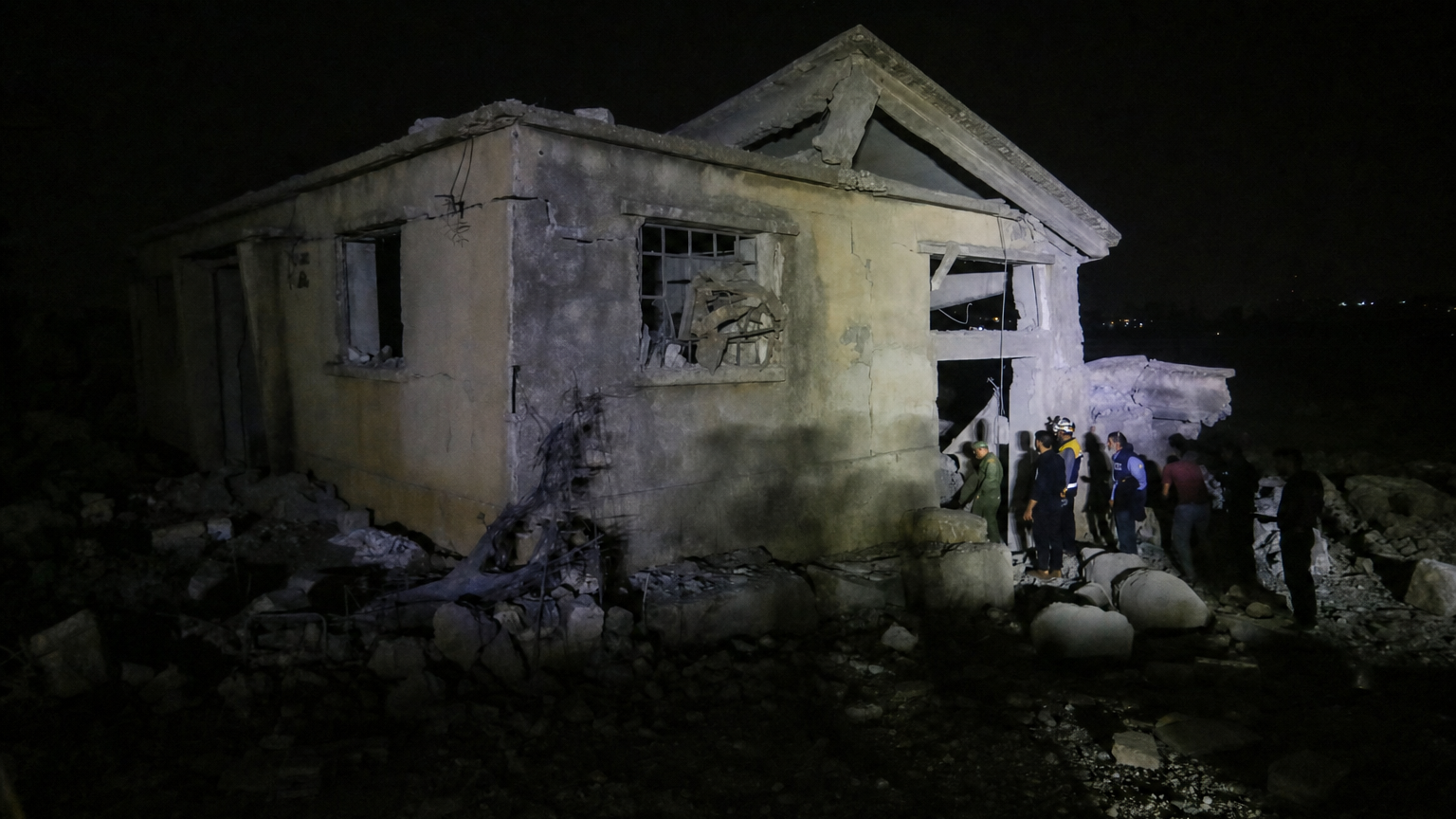
Jordan’s armed forces announced that its fighter jets struck hideouts of terrorist organisations in southern Syria on October 26, 2026. The military said in a statement that the retaliatory operation killed and wounded many members of the groups while destroying a number of their vehicles. Jordanian officials maintained that the strikes were coordinated with Damascus and directly connected to the perpetrators of the Karak church attack.
Syrian authorities rejected claims of coordination, stating the military operation was conducted without prior notification and that an investigation had been opened. Health officials in Daraa province reported that at least seven civilians were killed in the raids, among them three children, a woman and an elderly man. Syria’s civil defence service detailed strikes on four sites including a tent in the village of Al-Tai that killed five members of one family along with an 80-year-old man in Al-Shayyah and a 60-year-old in Shahba.
The original assault occurred on October 24 at the Greek Orthodox St George’s Church in the village of Hammoud within Karak governorate, roughly 120 kilometres southwest of Amman. Gunmen opened fire during a funeral service, killing nine people and injuring at least 34 others with the toll rising after two victims later died of their wounds. The incident prompted three days of national mourning across Jordan.
Jordanian security forces arrested three suspects in the Karak area before dawn on the day of the strikes after the men opened fire from an abandoned house. The Public Security Directorate identified them as brothers Hazza Zaidan Muhammad and Mishal Zaidan Muhammad together with their brother-in-law Ahmad Sami Hussein, all Jordanian nationals. Interior Minister Mazen al-Faraya stated that the investigation file had not yet been closed and that no links to other cells had been identified so far.
King Abdullah II directed authorities to respond with an iron fist against those he described as outlaws of Islam attempting to undermine the unity of the Jordanian people. The church attack in a region with a notable Christian community has raised concerns over potential sectarian tensions within the kingdom. Jordan’s response included both the arrests and the cross-border operation targeting the linked groups.
Syrian border authorities closed the Nassib crossing, the main land route between the two countries, in the aftermath of the strikes. The Syrian Foreign Ministry called for stronger field and security coordination along the border to protect sovereignty and stability on both sides. The closure halted all traffic in both directions as the two governments continued to offer differing accounts of the events.