ع



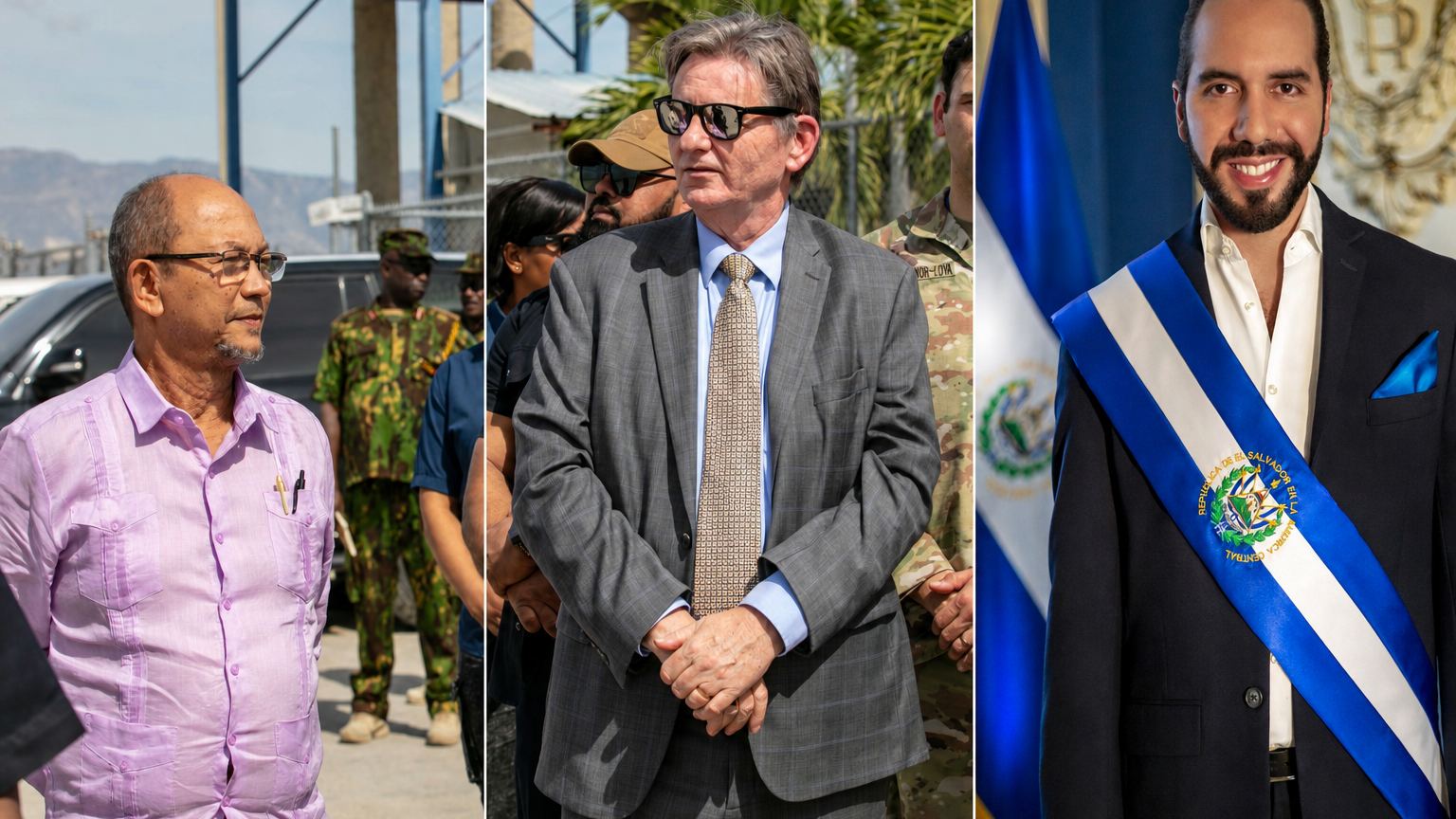
El Salvador President Nayib Bukele stated that the human remains delivered at a Haitian airport were not those of the four missing aviation technicians, declaring in a post on X that “They are not our men.” According to Reuters, the president detailed how one corpse was that of a child while another belonged to a man of considerably greater height than the Salvadorans, with a third wearing part of a uniform from a different army. Bukele shared images of identification cards, including one from Chad, that were found among the remains along with military uniforms from other countries, a disclosure also carried by the BBC and the Associated Press.
The four technicians vanished on October 18 after armed groups ambushed their armored vehicle in the Croix-des-Bouquets area on the outskirts of Port-au-Prince while the men were returning from a market to their base. They jumped from the burning vehicle during the attack, which Reuters described as the first major incident targeting the Gang Suppression Force since the UN-backed mission began operations earlier this year. No gang has claimed responsibility for the ambush, and Bukele has characterized the disappearance as a kidnapping by Haitian criminal groups.
Bukele announced a military operation days after the incident with the stated aim of securing the men’s safe return, dispatching special forces that the Haitian newspaper Le Nouvelliste placed at around 450 soldiers in total. The president had warned gang leaders that failure to release the hostages alive and unharmed would trigger a far stronger response than the initial attack, drawing on El Salvador’s experience dismantling domestic gangs. An anonymous Salvadoran government official confirmed to the Associated Press that the bodies were not those of the missing men, aligning with Bukele’s assessment.
The missing personnel served as aviation technicians focused on medical evacuations rather than combat roles within the multinational Gang Suppression Force, which the UN Security Council authorized to support Haitian police against entrenched armed groups. Bukele emphasized this distinction in his public statements, noting that the Salvadoran contribution centered on pilots and technical staff whose primary task was saving lives. Reuters reported that the international security mission itself declined to comment on the latest developments surrounding the recovered bodies.
The New York Times had reported on October 24 that the bodies, found on the outskirts of the capital and described as severely burned, were believed to belong to the Salvadoran technicians, citing individuals close to the mission and a humanitarian organization contracted to recover them. That account prompted Bukele’s direct rebuttal hours later, with the president responding to the newspaper’s post on X. Forensic examinations had been planned prior to the handover at the airport, according to sources cited across reporting from the Independent and Deutsche Welle.
Haiti’s gang violence has intensified in recent years, with armed groups expanding control beyond Port-au-Prince and complicating international stabilization efforts that include the Gang Suppression Force. El Salvador first deployed personnel to the mission in 2025 and extended its participation through legislation passed earlier this month, according to the Independent. The current search operation continues even after the mismatched remains were ruled out, with Haitian authorities having declared the recovery of the four men an absolute priority in statements carried by multiple outlets.