ع



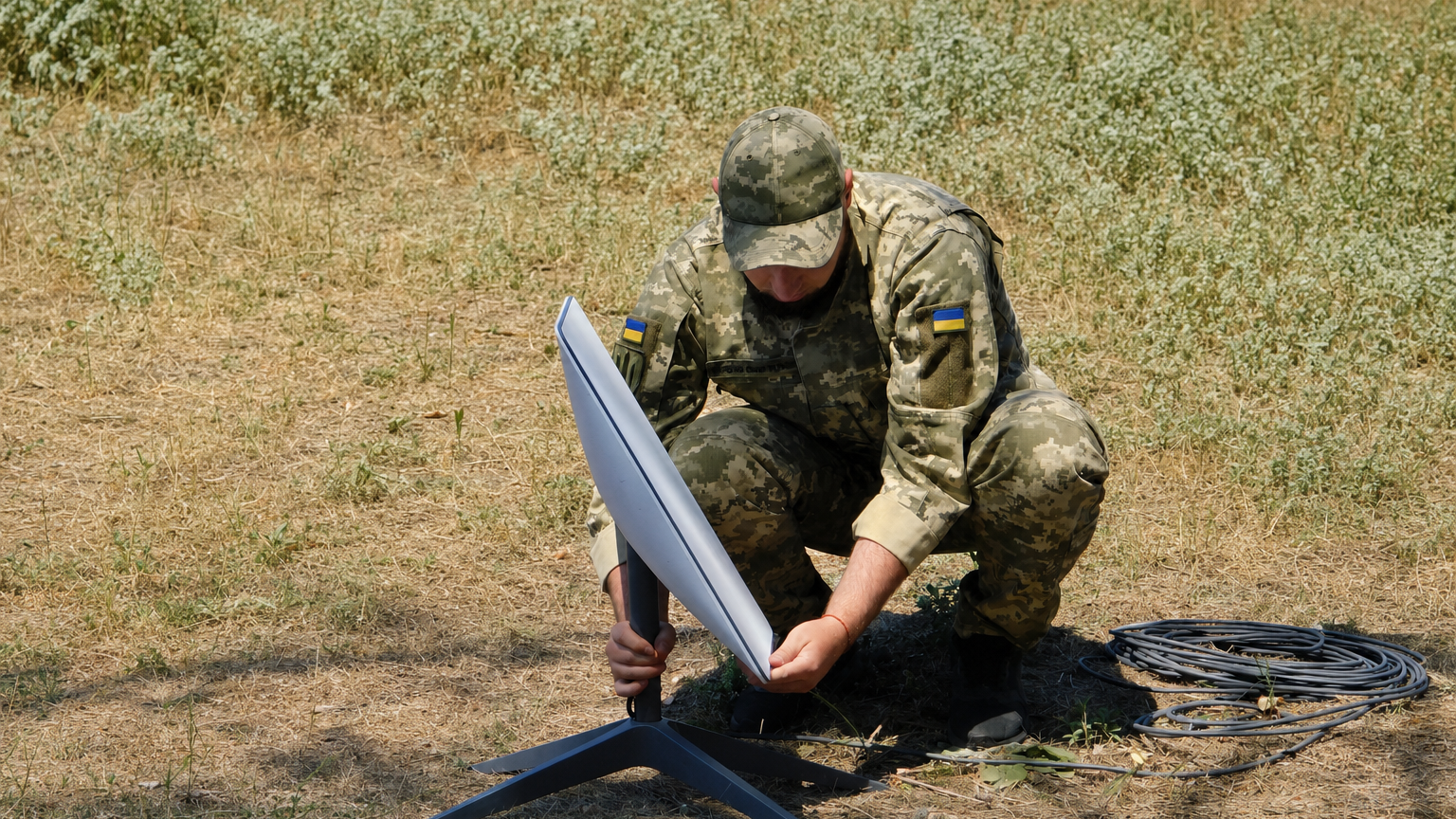
Ukrainian officials reported on October 23 that speed restrictions on the military-grade Starshield version of Starlink persisted for drone operations despite U.S. President Donald Trump’s announcement the previous day that Elon Musk had restored full access. Morning tests showed connectivity losses at speeds above 160 kilometres per hour with navigation issues remaining, a government official told Politico on condition of anonymity. A defence ministry official told reporters that instances of connectivity loss at 161 km/h were still being observed and no confirmation of lifted restrictions had been received. Some Ukrainian drone pilots reported a marked improvement in performance while others noted constant interruptions that continued to affect missions.
The restrictions were introduced without warning in mid-October, hampering Ukraine’s attack and air defence drone missions according to a Reuters dispatch on October 14. Presidential adviser Serhiy Beskrestnov wrote on Telegram that the defence forces had not received prior notice of the limitation on Starshield above 160 km/h, leading to the disruption of several missions. Ukraine’s 7th Rapid Reaction Corps deployed in the southeast stated that units had been forced to cancel operations after connections dropped for 10 to 20 seconds at speeds of 110 to 120 km/h. The corps added that the interruptions made drones harder to control even as they kept moving.
Trump told reporters on October 22 that Musk had restored the service after a conversation, declining to say whether he had called the SpaceX chief, the BBC reported. “I don’t want to comment on it, whether I called or whether somebody else called, doesn’t make any difference, I guess. The bottom line – he put it back,” Trump said. Ukrainian President Volodymyr Zelensky stated earlier on October 23 that speeds on Starlink systems had not been restored for Ukraine and that he hoped for talks with U.S. Secretary of State Marco Rubio in the coming days, according to Reuters. A senior European official told the Associated Press on October 23 that nothing had changed in the operation of the military-grade Starshield service.
Conflicting accounts have circulated over responsibility for the initial slowdown that began on October 13. The Wall Street Journal reported that Musk ordered the speed cap after discussions with Trump, who had expressed frustration over Ukrainian strikes on Russian oil refineries that he linked to rising energy prices. Reuters cited U.S. and Western officials stating that the order to limit the system originated inside the White House although a senior U.S. official said no such request came from Trump himself. Musk posted on X that any limits on speed or usage are decided by the U.S. military and ultimately the president.
Starshield, the military version of Starlink supplied through the Pentagon, has served as a backbone for Ukrainian battlefield communications and drone guidance since early in the conflict that began with Russia’s invasion in 2022. The system enables longer-range strikes on Russian logistics in occupied southern and eastern Ukraine where terrestrial networks have been heavily damaged. Ukrainian forces equip many drones with Starshield receptors for onboard guidance, and the October limitations rendered some offensive and interceptor drones virtually useless at high speeds, according to Ukrainian defence sources who spoke to Reuters.
Zelensky described the restriction as a planned operation specifically targeting Starshield’s operating speed over Ukraine, a claim made before Trump’s latest comments. An adviser to Zelensky told AP News on October 16 that Ukraine was in active negotiations with the Pentagon, SpaceX and the U.S. government to either lift the cap or switch to an aviation package without speed limits, though the latter would come at much higher cost. Defence officials continue to test the network while seeking clarification from SpaceX, NATO and U.S. authorities on the terms of service required for full functionality.