ع
ع


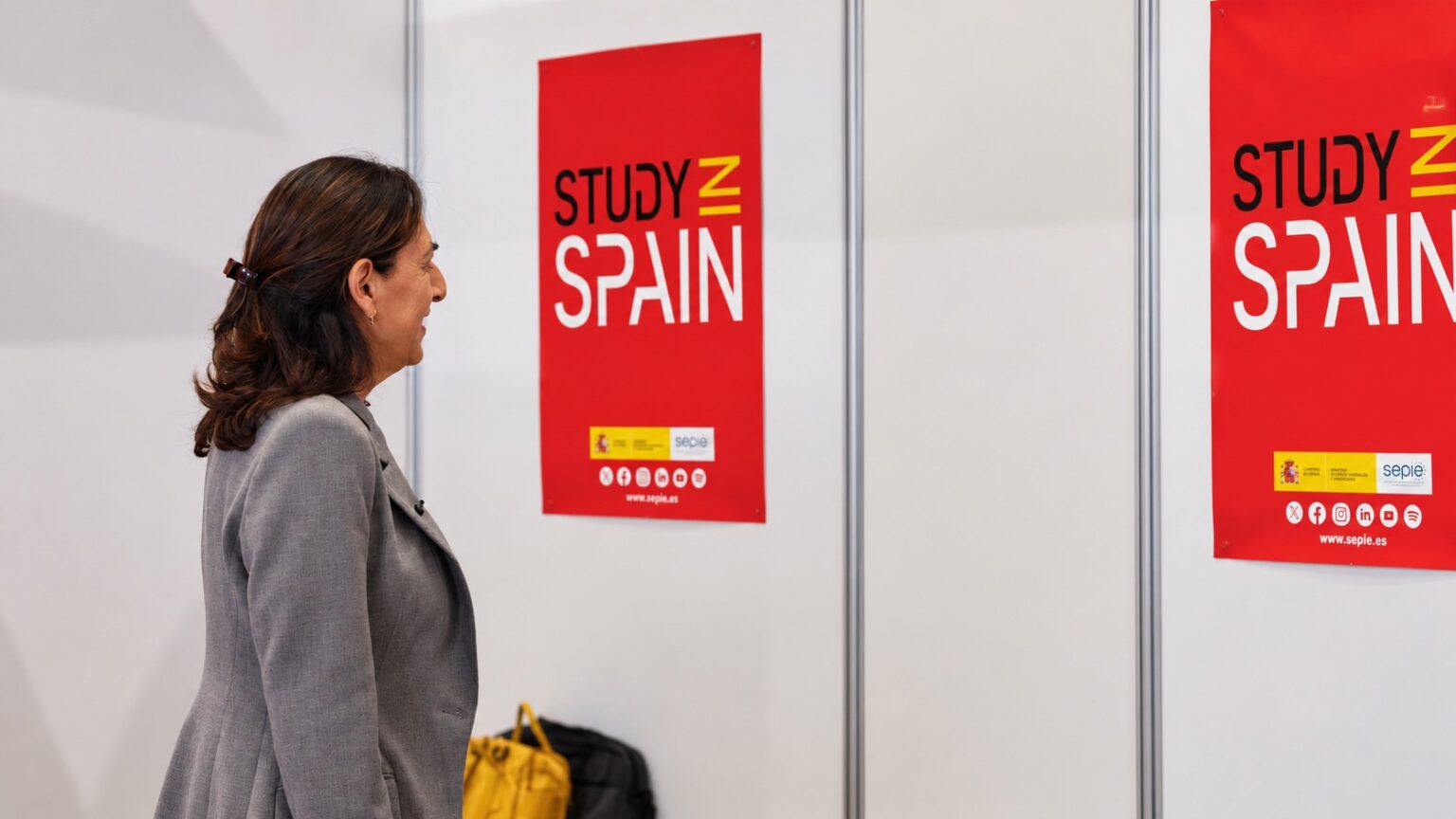
The Study in Spain stand, identified with the Embassy of Spain in Kuwait, fielded questions about access to university and the steps after choosing a course. The discussion showed why destination interest needs to become programme-specific research.
At the Study in Spain stand at HigherED in Kuwait, visitors were asking a practical question: how do they get from an interest in Spain to a place at a Spanish university? The stand’s representative described enquiries about university access, subject choices and where to find reliable information.
Speaking to Diwaniya Media, she said medicine, engineering and business had featured among the interests raised by visitors. These were observations from conversations at the stand, rather than a ranking of demand among all students in Kuwait.
The booth signage identified the Embassy of Spain in Kuwait. That gave the discussion an official point of contact, while the representative’s advice directed students towards the institutions and information sources that could address the details of their applications.
Beginning with the actual course
A country-level interest is useful for starting research, but a university application needs a more precise target. The representative pointed visitors towards official university information, where they can examine the course they want and the requirements associated with it.
That is particularly relevant to the subjects mentioned at the stand. Medicine, engineering and business each cover a wide range of programmes and institutional settings. A student needs to know the exact degree, its language of instruction and the route by which their school qualifications will be assessed.
Spain’s UNEDasiss service provides information for international students about academic assessment and access to undergraduate study. It is one official resource for understanding the steps involved, alongside the admissions information of the university the student intends to enter.
The appropriate starting point is the applicant’s own educational background. Students in Kuwait can hold different school qualifications, so the process should be checked for the qualification concerned. A general account from another applicant may be helpful context, but it cannot resolve all the requirements of a different application.
Looking carefully at public and private options
The representative discussed differences between public and private institutions and the competition for places. For applicants, the useful conclusion is to investigate the particular university and programme rather than assume that one category guarantees a straightforward admission.
Students can compare the published entry criteria, the method of assessment and any additional steps required by their chosen institution. They should also look at the full course structure and the language used in teaching, since those details affect both preparation and the eventual student experience.
A meaningful comparison includes cost, but it should avoid reducing the decision to a single tuition figure. The location, length of study and practical arrangements for attending the course all belong in the family’s discussion. The university can provide the programme-specific information needed to build that picture.
The representative’s emphasis on official websites was therefore more than a direction to a search page. It was a way to move the conversation from broad impressions to information that a student can save, revisit and use when deciding whether to apply.
Separating admission from the move to Spain
The HigherED interview also touched on the steps after a university accepts a student. The representative discussed an admission letter in the context of a study-visa application, while making clear that there are further requirements to address.
Applicants should use the Embassy of Spain in Kuwait as the official starting point for current consular information relevant to their circumstances. An academic offer and permission to travel or reside for study are separate matters, and one should not be treated as a guarantee of the other.
The practical value of that distinction is in planning. Students can establish the university’s requirements and the relevant consular process early, then confirm what must be completed at each stage. They should ask the responsible office about the requirements for their particular course and situation rather than relying on an exhibition overview as a complete checklist.
Keeping the questions separate also helps families seek the right answer. A university is the source for its academic admission decision. The responsible consular authority explains the applicable visa process. A clear route to both makes the overall preparation easier to understand.
Using the exhibition as a starting point
Spain’s education-promotion work has a wider institutional context. The Spanish Service for the Internationalisation of Education, known as SEPIE, describes participation in international study fairs and information sessions about the Spanish university system among its activities.
For students, the advantage of a fair is the chance to begin a conversation and identify the next reliable source. The representative at HigherED could introduce the system and respond to common questions, while the detailed application still needs to be developed with the relevant institution.
A useful follow-up can begin with a small shortlist. Each entry should name the degree and university, explain why it interests the student and record the requirements still needing clarification. That is more actionable than a broad intention to study somewhere in Spain.
Families can then bring academic preparation, language, cost and timing into the same discussion. The aim is to understand the commitment before making it, using current information from the organisations responsible for each part of the route.
The Spain stand’s HigherED conversation showed interest in several demanding and varied fields. Its most practical contribution was to direct that interest towards specific programmes and official guidance, giving students a clearer basis for the next question they need to ask.