ع
ع


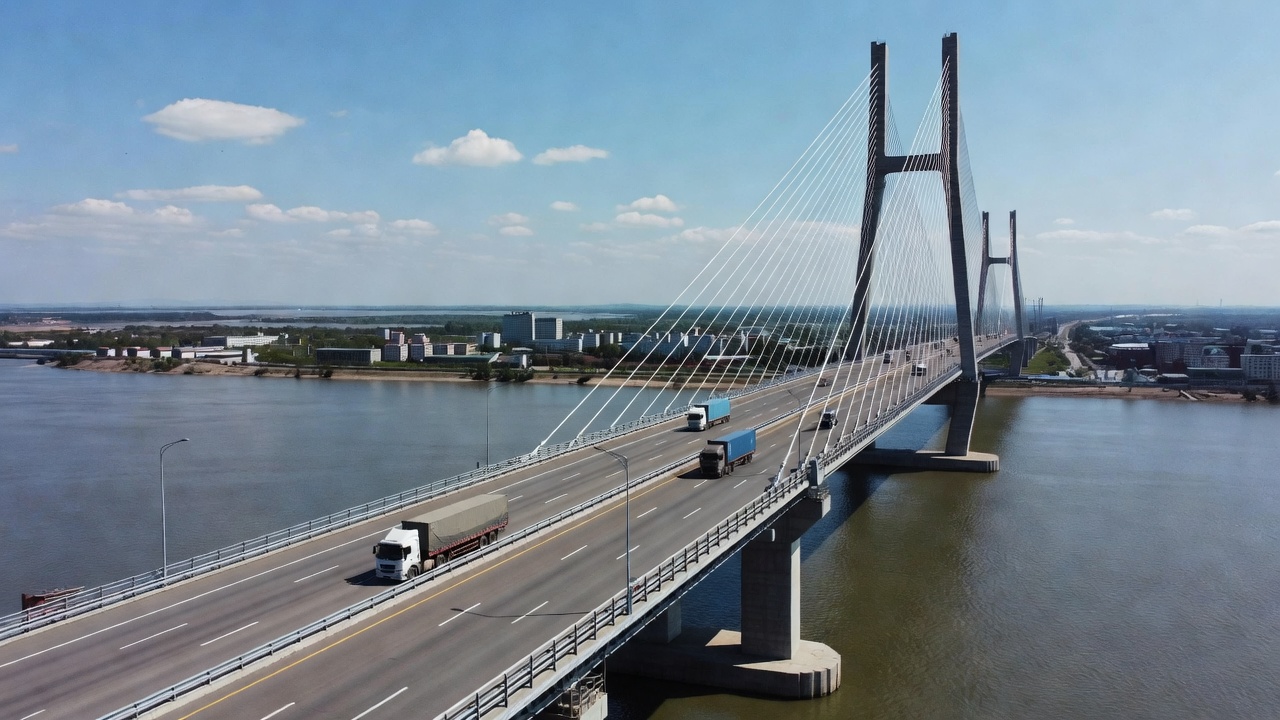
China and North Korea officially opened their most significant new land border crossing on Thursday, with trucks adorned with national flags driving across the 3-kilometre New Yalu River Bridge that links the Chinese city of Dandong to Sinuiju in North Korea. Chinese Premier Li Qiang said in a video address at the ceremony that bilateral relations are entering a new phase and embarking on a new chapter, according to state news agency Xinhua. The event signals renewed momentum in ties that have been marked by two leader summits in the past year, Reuters reported from the scene where crowds gathered on the Chinese side to watch the proceedings.
The bridge was completed by China in 2014 at a cost of about 2.2 billion yuan but remained unused for more than a decade while North Korea delayed finishing its approach roads and customs facilities, a Reuters assessment found. Relations between Beijing and Pyongyang had cooled after China supported United Nations sanctions over North Korea’s nuclear and missile programmes, multiple outlets including the BBC noted. Work on the North Korean side accelerated this year following a visit by President Xi Jinping to North Korea in June, with satellite analysis by SI Analytics showing completion in just four months through a rapid construction campaign.
China’s exports to North Korea rose 25 percent to 2.3 billion dollars last year, reaching the highest level in six years, according to Reuters data drawn from official figures. Overall bilateral trade recovered to around 2.7 billion dollars in 2025, approaching pre-pandemic volumes, a BBC report citing trade statistics indicated. Yet experts caution that UN sanctions will prevent any immediate full restoration of earlier trade levels, with Hankuk University of Foreign Studies professor Kang Jun-young telling the BBC that a sharp increase remains unlikely.
The long delay had posed a significant setback for Dandong’s economy, which had thrived in the early 2000s as the main gateway to North Korea’s isolated market, Reuters correspondents reported from the border city. Until now, the bulk of road trade has relied on the 83-year-old Sino-Korean Friendship Bridge located about 10 kilometres upstream, which carries both rail and a single-lane road with strict weight limits, according to Chinese state media descriptions. Local businesses and residents expressed hopes that the new four-lane structure would ease congestion and stimulate activity in the region.
The cable-stayed bridge features a 28.5-metre-wide deck designed for two-way traffic and navigation clearance for vessels up to 3,000 tons, Xinhua detailed in its coverage of the opening. It is intended to become the primary route for commercial exchanges, supplementing rather than replacing the older crossing, a China Daily report stated. North Korean state media has not yet issued its own account of the inauguration, Reuters noted in dispatches from the border.
This development follows North Korea’s opening of a new road bridge with Russia across the Tumen River last month, as Pyongyang expands transport links with both major neighbours, an Associated Press dispatch indicated. The timing underscores efforts to strengthen economic cooperation even as North Korea maintains wariness about over-reliance on any single partner, according to analysts cited across regional reports. Chinese Foreign Ministry spokesperson Mao Ning had described the project beforehand as an important facility for connectivity that would further facilitate trade and people-to-people exchanges.