ع
ع


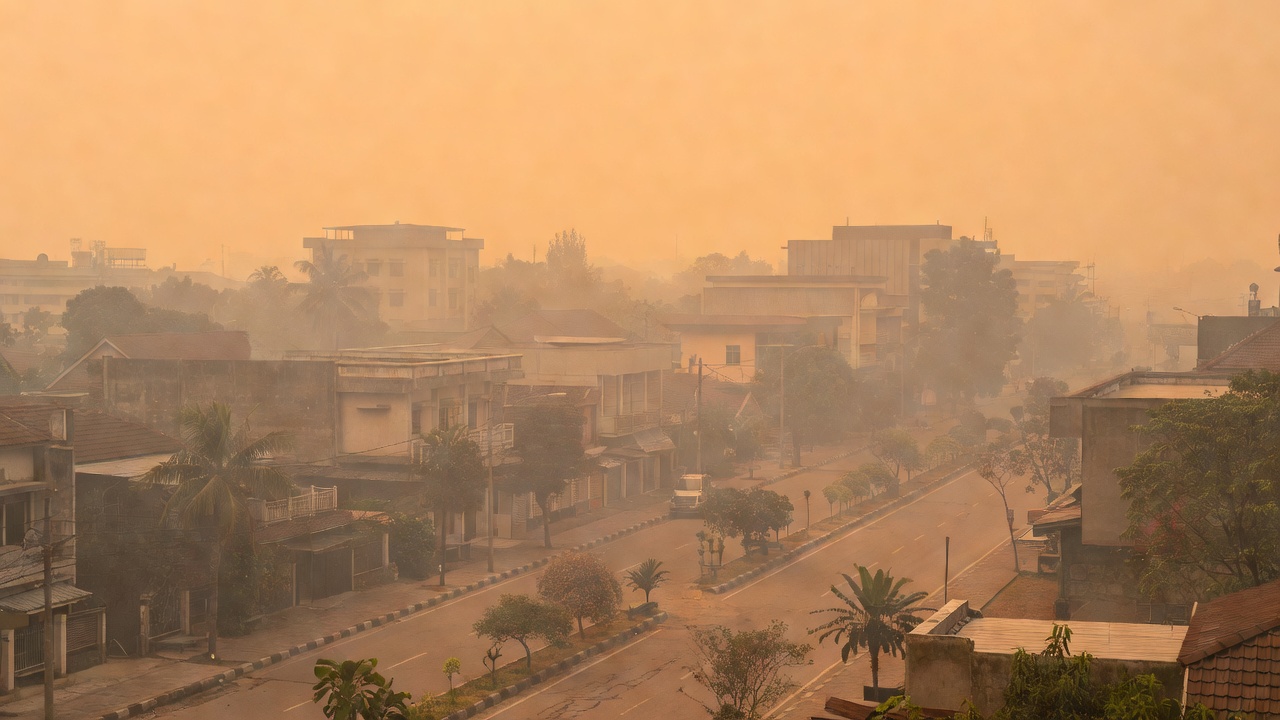
Witnesses in Palangka Raya captured video of the dense orange smog reducing visibility and covering streets as wildfires burned nearby the BBC reported. The ISPU air pollution index exceeded 1 200 according to data from the national environment ministry four times higher than the hazardous level of 300. Indonesia’s Meteorology Climatology and Geophysics Agency separately measured fine particulate matter concentrations in the city reaching nearly five times the threshold for its highest pollution category on the same day.
The Forestry Ministry placed the number of high confidence hotspots nationwide at 244 as of October 14 after a sharp decline from the previous day while cumulative burned area across priority provinces stood at nearly 130 000 hectares. An independent assessment by Nusantara Atlas found that almost 896 000 hectares had burned by the end of August already exceeding levels seen in comparable periods of recent years. The Copernicus Atmosphere Monitoring Service estimated that Indonesian fires had emitted 140.5 megatonnes of carbon by early October accounting for around 13 percent of the global total for the year.
Agricultural slash and burn practices on degraded peatlands have compounded the crisis according to a national disaster mitigation agency briefing. The agency told a cabinet meeting chaired by President Prabowo Subianto that more than 60 000 personnel were deployed for ground operations across six priority provinces yet thick smoke had grounded water bombing aircraft in Central Kalimantan for over a week. Peatland degradation from decades of plantation expansion has left 16.4 million of Indonesia’s 24.2 million hectares of peat vulnerable to fire Pantau Gambut data shows with 74 percent of Kalimantan hotspots occurring inside corporate concessions per an analysis by WALHI.
Transboundary smoke from the blazes has spread to Singapore Malaysia and Papua New Guinea the ASEAN Specialised Meteorological Centre reported with schools closed in several Malaysian states and visibility reduced across border regions. Himawari satellite imagery processed by the Meteorology Climatology and Geophysics Agency on October 13 showed haze covering most of Sumatra Kalimantan and parts of Papua as well as neighboring countries. Reuters noted that the 2026 season ranks among Indonesia’s most severe in 11 years with El Niño driven dryness amplifying fire spread across Borneo and Sumatra.
Health authorities have recorded a sharp rise in acute respiratory infections with the health ministry reporting nearly 175 000 cases between mid August and late September in affected provinces. The Center of Economic and Law Studies estimated economic and healthcare costs from fires through August at up to 123 trillion rupiah or roughly 6.9 billion dollars a figure projected to grow if conditions persist into November. Residents in Palangka Raya and other haze zones have reported eye irritation breathing difficulties and the need to continue daily activities despite the toxic air according to accounts gathered by local media.
Firefighting efforts include 61 aircraft for water bombing patrols and weather modification alongside ground teams from the military police and local communities the Forestry Ministry stated in an update. Visibility around Tanjung Puting National Park had dropped to 500 meters at times hampering aerial operations while swampy terrain added further obstacles a regional military commander told President Prabowo. International Union for Conservation of Nature primate specialists warned that habitat for more than half the Bornean orangutan population has been affected with thousands of the critically endangered animals at risk of displacement or death from the fires and smoke.