ع
ع


Elon Musk accused certain oligarchs of blocking Starlink to maintain a monopolistic chokehold on the Indian people in a post on X on October 8, 2026, describing the alleged interference as a crime against the Indian public. Musk followed up the next day by directly questioning the influence of Mukesh Ambani, whose Reliance conglomerate controls Jio, India’s largest mobile operator. “Starlink is licensed in over 165 countries and has spent five years complying with every single law and requirement of the government of India, so why still no license? Is Ambani the real boss of India?” Musk wrote on X, according to multiple reports including those from the BBC and TechCrunch.
India’s Ministry of Communications rejected Musk’s claims the following day, stating that its regulatory framework for satellite communication services is fair and non-discriminatory. The ministry noted that three operators, Starlink, Eutelsat OneWeb and Jio Satellite Communications, have received licences and stand at broadly the same stage awaiting security clearances and spectrum allocation. A statement from the ministry emphasised that security assessments are under way for all three to ensure user and data safety before any can proceed to commercial services.
Starlink secured its Global Mobile Personal Communication by Satellite licence in June 2025 after an earlier application in 2022, according to the Department of Telecommunications records cited by the Times of India and Business Standard. Eutelsat OneWeb, in which Bharti Airtel holds a major stake, obtained its licence in 2022 while Jio Satellite Communications followed in October that year. All three must complete home ministry security reviews and obtain spectrum before launching, a process the ministry said remains ongoing without favouritism toward any applicant.
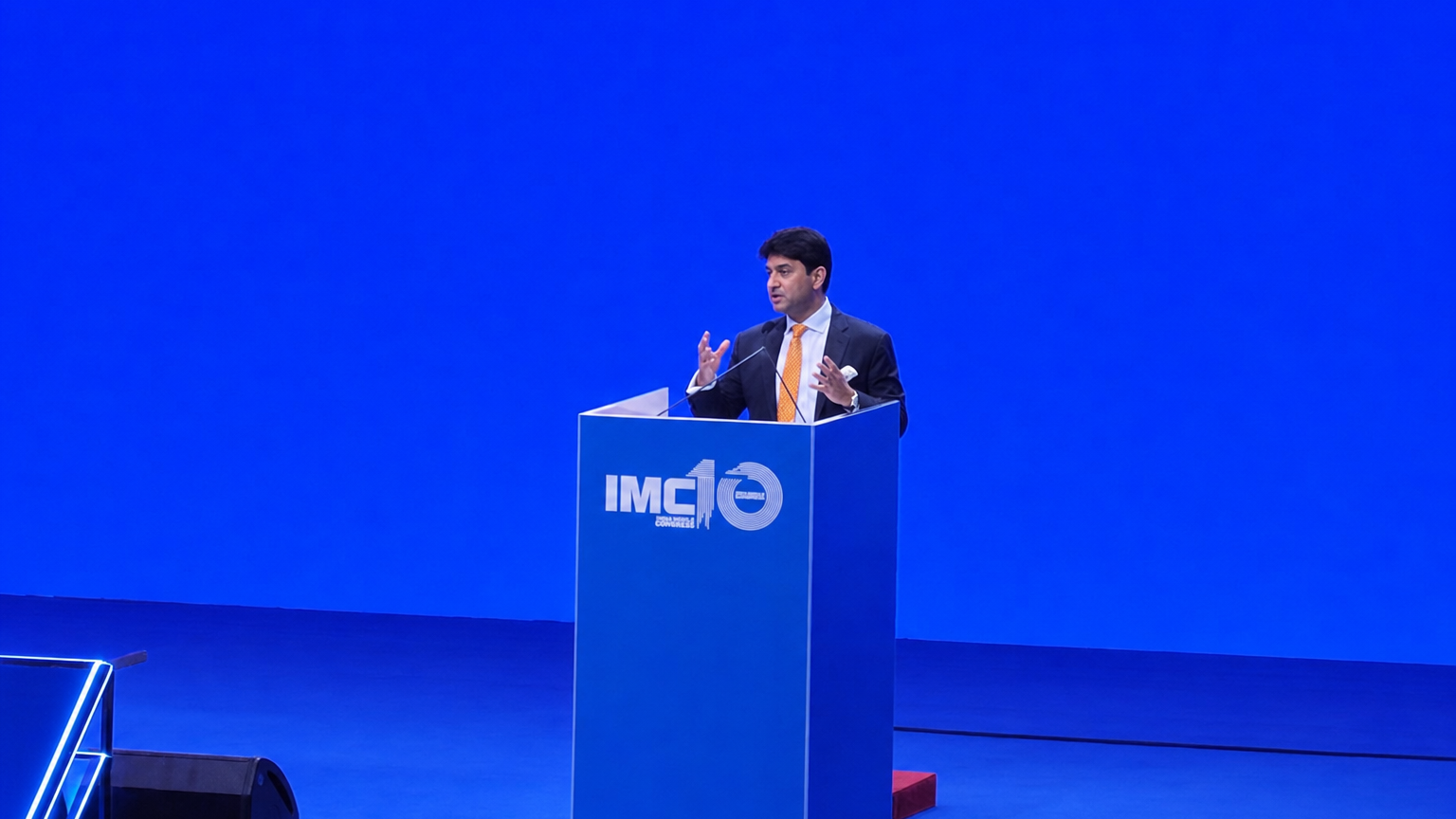
Musk’s comments drew a response from Leader of the Opposition Rahul Gandhi on X, who wrote “Welcome to India, Elon. Wait till you discover the other guy,” prompting Musk to reply that the situation is indeed troubling. Union Communications Minister Jyotiraditya Scindia told attendees at the India Mobile Congress on October 9, 2026 that India does not allow monopolies and that customers will choose among competing satellite services once operators meet all conditions. Scindia added that Amazon’s Kuiper project would also need to follow the full licensing process, according to coverage in Mint and the New Indian Express.
Reliance Jio and Bharti Airtel together control roughly 80 percent of India’s telecom market with more than 910 million broadband subscribers, according to Telecom Regulatory Authority of India data referenced across CNBC and Wealth Adviser reports. A Grand View Research assessment projects the Indian satellite internet market to expand from $647 million in 2025 to $2.53 billion by 2033 at a compound annual growth rate of 18.8 percent, driven by demand in remote and rural areas where terrestrial infrastructure remains limited. Starlink has already established partnerships with both Jio and Airtel to distribute services and has constructed gateway infrastructure within the country, according to statements from SpaceX executives covered by Communications Today.
Starlink first applied for Indian market entry in 2020 but faced repeated regulatory reviews on foreign direct investment and local compliance before receiving its latest approvals in 2025, a timeline confirmed in reports from Forbes and the Economic Times. Jio Satellite Communications has announced plans for its own constellation of 1,600 satellites, adding competitive pressure in the emerging sector, according to the Tribune. No timeline has been provided by authorities for completion of the pending security reviews that currently hold up all three licensed operators.