ع
ع


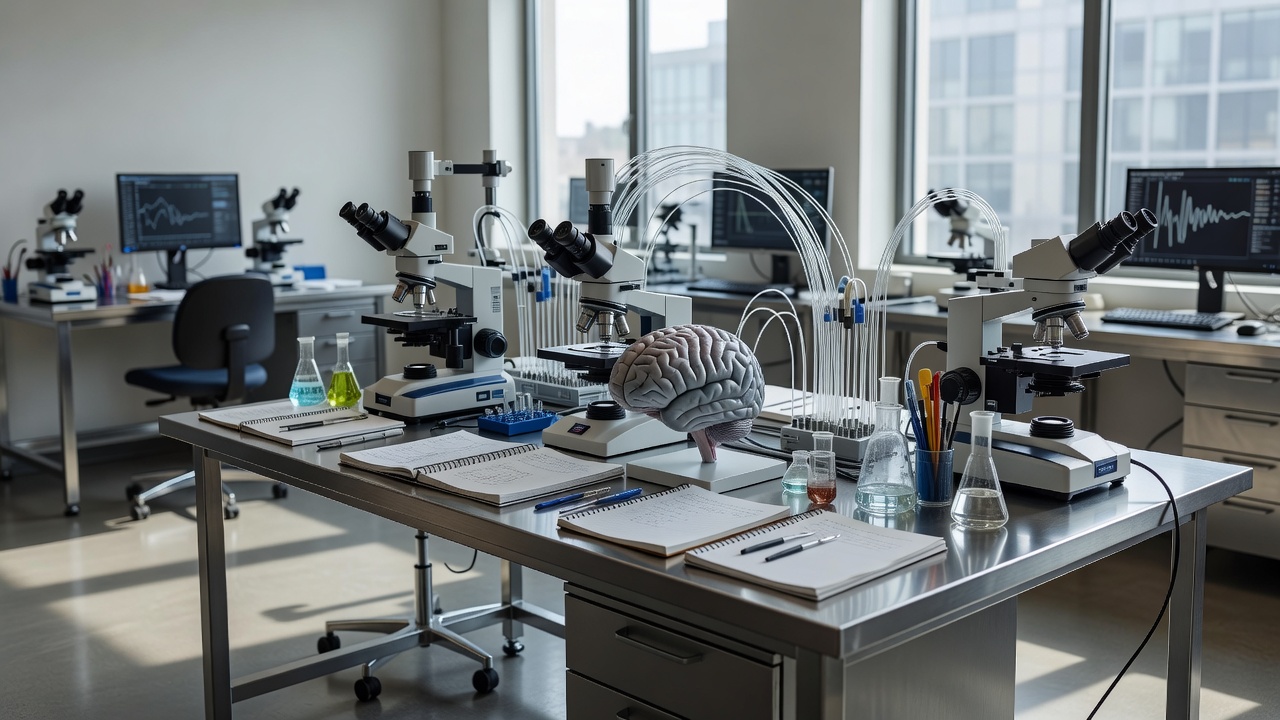
The Karolinska Institutet awarded the 2026 Nobel Prize in Physiology or Medicine on October 5 to Karl Deisseroth, Peter Hegemann and Georg Nagel for their discoveries concerning light-gated ion channels and optogenetics that make it possible to show how nerve cells shape feelings. Hegemann and Nagel discovered channelrhodopsin in algae, a protein that makes cells light-sensitive no matter which type they are placed into. Deisseroth applied this by introducing the gene into rat nerve cells, allowing blue light to trigger nerve signals, and later extended it to living mice brains. This technique, known as optogenetics, has become a standard tool in neuroscience laboratories globally.
According to details on NobelPrize.org, the work began with studies of how a single-celled alga swims toward light, leading to the identification of the key protein in the early 2000s. The method enables precise activation or inhibition of individual neurons, revealing their roles in forming memories, feelings and behaviors. Researchers have used it to bring specific memories to life or to drive particular actions in animal models.
A STAT news article highlighted that optogenetics provides opportunities for mapping the brain in ways previously unimaginable, as noted by Per Svenningsson, chair of the Nobel Committee for Physiology or Medicine. The prize amount of 12 million Swedish crowns, approximately $1.2 million, will be divided among the three winners, Reuters figures show. Deisseroth holds positions at Stanford University and the Howard Hughes Medical Institute, while his co-laureates are affiliated with Humboldt University in Berlin and the University of Würzburg. The announcement marks the start of Nobel week, with the physics prize due Tuesday.
Thomas Perlmann, the Nobel Committee secretary general, reached all three laureates by phone to inform them of the award, a CTV News report indicated. The technique has also yielded insights into nervous system interactions with cells in the heart and gut, per the official popular information from the Nobel site. Applications in studying psychiatric and neurological disorders are a major focus of ongoing research using this tool.
Last year’s Nobel in medicine recognized work on how the immune system regulates itself to avoid attacking healthy cells, providing potential pathways for new cancer therapies, according to multiple accounts. The 2026 laureates’ contribution has laid the foundation for a new era in neuroscience, the committee assessment found. Optogenetics continues to unravel mysteries of brain function that have puzzled scientists for generations.
In remarks tied to the announcement, the laureates’ combined efforts transformed a basic biological observation into a powerful experimental technique now employed in thousands of studies. The Nobel Assembly emphasized that this method is revealing the brain’s secrets at an unprecedented level of detail. Further developments may one day lead to targeted treatments for brain-related conditions.