

 ع
ع


Disturbing footage of four boys under the age of 14 beating three puppies to death with sticks before setting their mother, a stray dog named Wang Wang, on fire in Jieyang, Guangdong province, emerged online at the end of June 2026, prompting widespread outrage. Jieyang authorities stated last month that the boys would not face criminal charges due to their age and would instead be sent to a specialised school, though they provided no further details on the programme. Reports indicated the boys may have filmed and uploaded the video themselves, but police have declined to comment while censors have attempted to limit its spread to protect the minors’ identities, according to a BBC News report published on 22 July 2026.
Beijing’s censorship apparatus acted swiftly on the case by scrubbing many social media posts and limiting shares, with officials issuing a statement that read, “We urge the public not to disseminate related information, to reject cyberbullying, and to work together to create a good environment for the growth of minors.” Despite these measures, discussions have continued to draw thousands of comments three weeks later, centring on demands for laws against animal cruelty that China currently lacks. A woman identified only as PL in eastern China told BBC News that the footage affected her severely, adding, “We can’t make our voices heard, so many people outside China are actively helping us to share this message.”
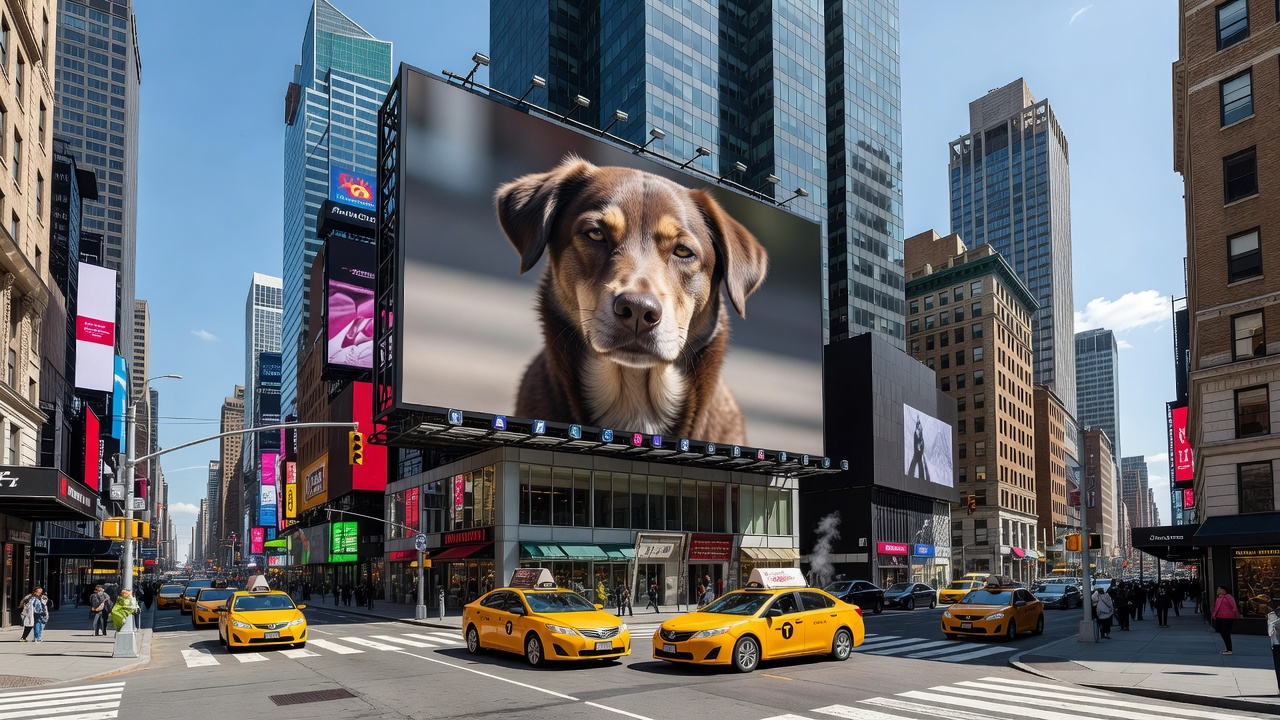
The International Organisation for Animal Protection based in Italy reported receiving more than 100 submissions from around the world calling for intervention and said it had requested additional details from Chinese authorities. In response, activists have placed billboards featuring Wang Wang in New York City’s Times Square, where images appear every 35 minutes with captions such as “She was loved. She wanted to live. She should still be here.” A Taiwanese woman identified as CK, who spent NT$30,000 to erect a similar billboard near Taipei 101, told BBC News it aimed to foster unity, stating, “It makes everyone feel like we’re speaking out together on this issue, rather than airing our individual opinions online.” Another Taiwanese activist named Elara used artificial intelligence to translate summaries of the case into more than 10 languages for wider online circulation.
Within China, businesses including beauty brand Amortals and streetwear label Wah Yan Ching Nin have displayed advertisements outside shopping malls calling for an end to animal abuse, while a cartoon of Wang Wang and her puppies with the message “Every life deserves respect and kindness” appeared on a stadium screen during a football match in Dalian. Stickers and car decals depicting the dogs have appeared for sale on the e-commerce platform Taobao, though some efforts faced pushback such as a mall in Changsha reportedly being instructed to remove related billboards. Residents in Hong Kong and Macau have also raised funds for posters on public transport as part of the expanding offline activities detailed in the BBC News coverage.
China maintains no nationwide law prohibiting animal cruelty, a gap that World Animal Protection has highlighted in its assessments of the country’s legislation, noting the absence of formal recognition for animal sentience or enforcement mechanisms against mistreatment. A 2020 poll conducted by state broadcaster CCTV News on Weibo drew more than 299,000 participants, with over 280,000 voting in favour of enacting anti-cruelty legislation as soon as possible, according to an analysis published by the Princeton Legal Journal. Animal welfare advocates have drafted expert proposals for such a law since 2009, yet economic concerns tied to the livestock and farming industries have presented persistent obstacles, a University of Hong Kong law professor told The New York Times in a related June 2026 report.
The Jieyang case represents the latest in a series of high-profile animal abuse incidents that have fuelled activism, including cases from 2020 involving the torture of dozens of cats and the scalding of a pregnant cat, as documented in multiple accounts over recent years. The New York Times reported in June 2026 that rising pet ownership, particularly among young people, has amplified calls for reform even as authorities restrict physical gatherings and online discourse related to civic activism. Petitions and emails to the Ministry of Justice at an address circulated in 2026 have sought inclusion of anti-cruelty provisions in legislative planning, building on earlier campaigns that have gained traction through social media despite periodic censorship.
Some local regulations exist in cities like Chongqing to address dog abuse, but these lack penalties and see limited enforcement, according to reporting by The New York Times. The broader movement has drawn international attention, with Wikipedia entries and change.org petitions summarising the 2026 Jieyang events while noting outcomes for the minors and the absence of legal repercussions under current frameworks. Activists continue to post on platforms like Weibo with comments urging sustained discussion, emphasising that persistent advocacy seeks to highlight the importance of preventing animal mistreatment without disrupting social order.