ع
ع


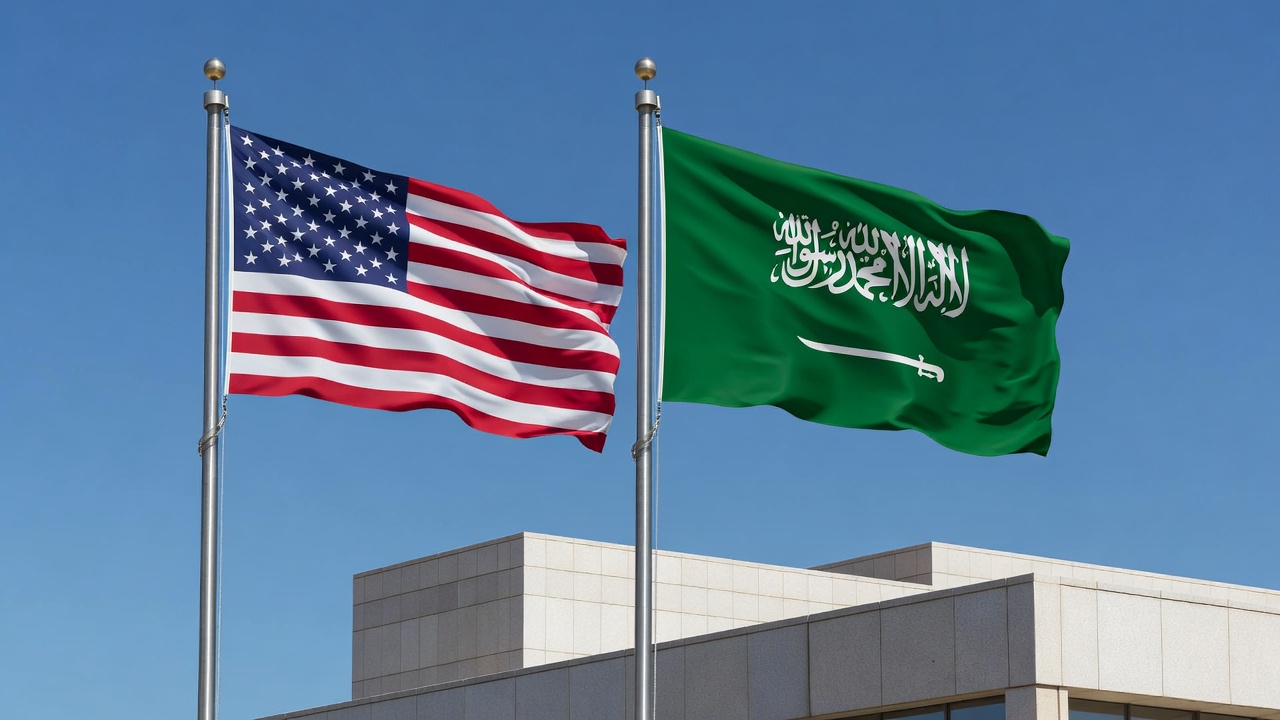
The US Department of Energy announced that the pact, paired with a bilateral safeguards agreement, creates the legal basis for a multi-billion-dollar, decades-long partnership advancing nuclear nonproliferation, safety standards and US commercial interests in civil nuclear technology. US Secretary of Energy Chris Wright stated that the agreements uphold the highest standards of nuclear safety and nonproliferation while relying on technology designed in the United States. A statement from the Saudi government described the accord as an extension of longstanding energy sector cooperation between the two countries following a visit by the Saudi leader to Washington last November.
Nuclear experts have raised proliferation concerns over reports that the deal could permit Saudi Arabia to enrich uranium on its soil at a US-built facility, a step the United States has never before taken with another partner. Rosemary Kelanic, director of the Middle East program at the Defense Priorities think tank, said it would be quite shocking if the agreement allows such facilities because producing its own nuclear fuel makes a country a much bigger risk for building nuclear weapons. The arrangement contrasts with the 2009 US-UAE nuclear deal, under which the United Arab Emirates agreed to forgo enrichment and reprocessing in what nonproliferation analysts have termed the gold standard for such pacts, according to assessments from the Arms Control Association and NTI.
Saudi Arabia has developed plans for a substantial civil nuclear program as part of its Vision 2030 economic diversification initiative, with World Nuclear Association data indicating targets of 17 gigawatts of nuclear capacity by 2040 through up to 16 reactors at an estimated cost of more than 80 billion dollars. A Congressional Research Service report updated in May 2026 noted that the kingdom established the Saudi Nuclear Energy Holding Company in 2022 to develop and operate facilities while creating an independent Nuclear and Radiological Regulatory Commission in 2018 to align with international standards. Riyadh has solicited bids for initial reactors at the Khor Duweihin site from vendors including China National Nuclear Corporation, EDF, Korea Electric Power Corporation and Rosatom, extending its formal procurement process several times.
The agreement arrives amid escalated regional tensions, including US and Israeli actions against Iran and announcements by Iranian-aligned Houthi forces of a maritime blockade targeting Saudi facilities, according to reporting by BBC News. It does not require Saudi diplomatic recognition of Israel, a condition that had previously stalled negotiations under multiple US administrations. Saudi Crown Prince Mohammed bin Salman told CBS News in 2018 that while the kingdom was not seeking a nuclear weapon, it would follow suit as soon as possible if Iran developed one.
The pact will undergo congressional review, where some lawmakers from both parties are expected to raise objections even though Republicans control both chambers of Congress. US Secretary of State Marco Rubio told reporters that the United States would not reach any agreement leading to proliferation risks, pushing back against critics who noted his earlier endorsement of the No Nuclear Weapons for Saudi Arabia Act. Massachusetts Democratic Senator Edward Markey issued a statement condemning what he termed hypocrisy and recklessness in allowing Saudi Arabia, described as a belligerent and authoritarian nation, to develop nuclear weapons technologies.
Energy sector expert Bob McNally called the deal a win for securing reliable, emissions-free power sources needed in the AI era, according to his comments reported by BBC News. A Congressional Research Service assessment found that earlier US-Saudi nuclear talks dating back to a 2008 memorandum of understanding had stalled over differences on enrichment restrictions and an International Atomic Energy Agency Additional Protocol. The current agreement could help counter reported interest from Russia and China in similar cooperation with Riyadh while reshaping aspects of Middle East power dynamics over time.